
Why Lease Negotiation is Critical for Your Miami Business
Commercial lease negotiation tips can mean the difference between a profitable Miami business and one crushed by costs. A staggering 68% of entrepreneurs sign commercial leases without professional legal review, leading to unexpected expenses and restrictive terms.
Top Commercial Lease Negotiation Tips for Miami Businesses:
- Research Market Rates: Know fair market values in Doral, Hialeah, and Medley.
- Understand Lease Types: Gross, Modified Gross, and Triple Net (NNN) leases have different cost structures.
- Negotiate Inducements: Request rent-free periods and generous TI allowances.
- Limit Personal Guarantees: Cap guarantees to protect your personal assets.
- Include Audit Rights: Ensure you can review Common Area Maintenance (CAM) charges.
- Secure Expansion Options: Negotiate a Right of First Refusal for future growth.
- Plan Your Exit: Include clear termination clauses and reasonable notice periods.
In Miami’s competitive market, a well-negotiated lease can save your business hundreds of thousands of dollars. Whether you need retail space in Doral, a warehouse in Medley, or a medical office in Hialeah, these fundamentals are key.
I’m Brett Sherman. My team and I have saved Miami-area businesses over $1 million using strategic commercial lease negotiation tips and AI-driven market analysis. We have deep experience across South Florida’s markets, giving our clients a decisive advantage.
Key commercial lease negotiation tips vocabulary:
- commercial lease agreement florida
- how long does it take to negotiate a commercial lease
- negotiating a commercial lease renewal
Mastering the Deal: Key Commercial Lease Negotiation Tips for South Florida Tenants

You’ve found the perfect space for your business in Miami, but the landlord-friendly lease agreement on your desk is designed to protect their interests, not yours. This is where smart commercial lease negotiation tips become your secret weapon, potentially saving your business hundreds of thousands of dollars.
Your negotiating power comes from data. High vacancy rates in Medley’s industrial corridor mean more landlord flexibility, while hot spots like Doral’s business district require different strategies. A data-driven approach that weighs your finances against current market conditions is essential. Every move must be calculated and strategic.
Step 1: Laying the Groundwork – Research and Assembling Your Team
Successful negotiation starts with preparation. First, perform a business needs assessment and set firm budget limits. Consider your three-year growth plan and remember that rent is often your second-largest expense. Factor in base rent plus all additional costs. If your future is uncertain, a shorter 2-3 year lease might offer valuable flexibility.
Next, conduct thorough market rent analysis and property research. Dive into comparable properties in Miami, Doral, Hialeah, and Medley to understand fair market values. Investigate the tenant mix, traffic patterns, and the landlord’s reputation by talking to existing tenants.
Finally, assemble your expert team. Commercial lease negotiation is a specialized skill.
- Tenant Representatives: An advocate like Signature Realty understands South Florida’s market, finds off-market deals, and uses AI-driven strategies. Landlords typically pay our commission, so there’s no direct cost to you. Learn more about our Tenant Representation Florida services.
- Commercial Real Estate Lawyers: Never sign a lease without legal review. An attorney will spot hidden risks and ensure the language protects your interests.
This groundwork allows you to negotiate from a position of strength. For more on local market dynamics, see our analysis of the Commercial Real Estate Market Miami.
Step 2: Decoding the Document – Lease Types and Hidden Costs

Understanding lease types is critical for managing costs.
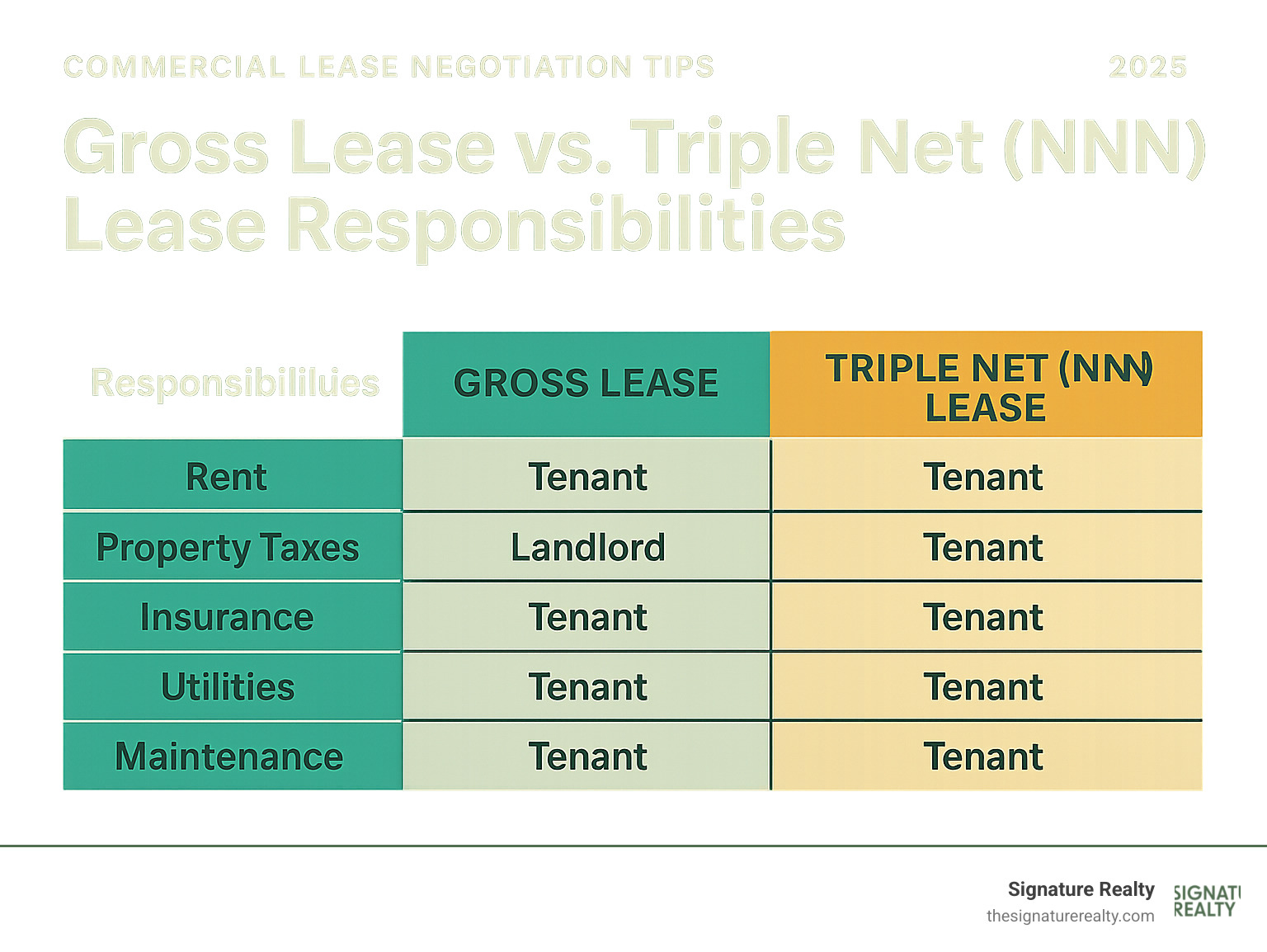
- Gross Lease: One fixed monthly payment. The landlord covers all property expenses.
- Modified Gross Lease: You pay base rent plus a share of some operating expenses.
- Triple Net (NNN) Lease: Common in South Florida, you pay base rent plus your share of property taxes, insurance, and common area maintenance. Understanding triple net lease terms is vital as these costs add up.
- Percentage Lease: Used in Miami retail, you pay base rent plus a percentage of gross sales over a set threshold.
The real challenge is additional rent, where hidden costs reside.
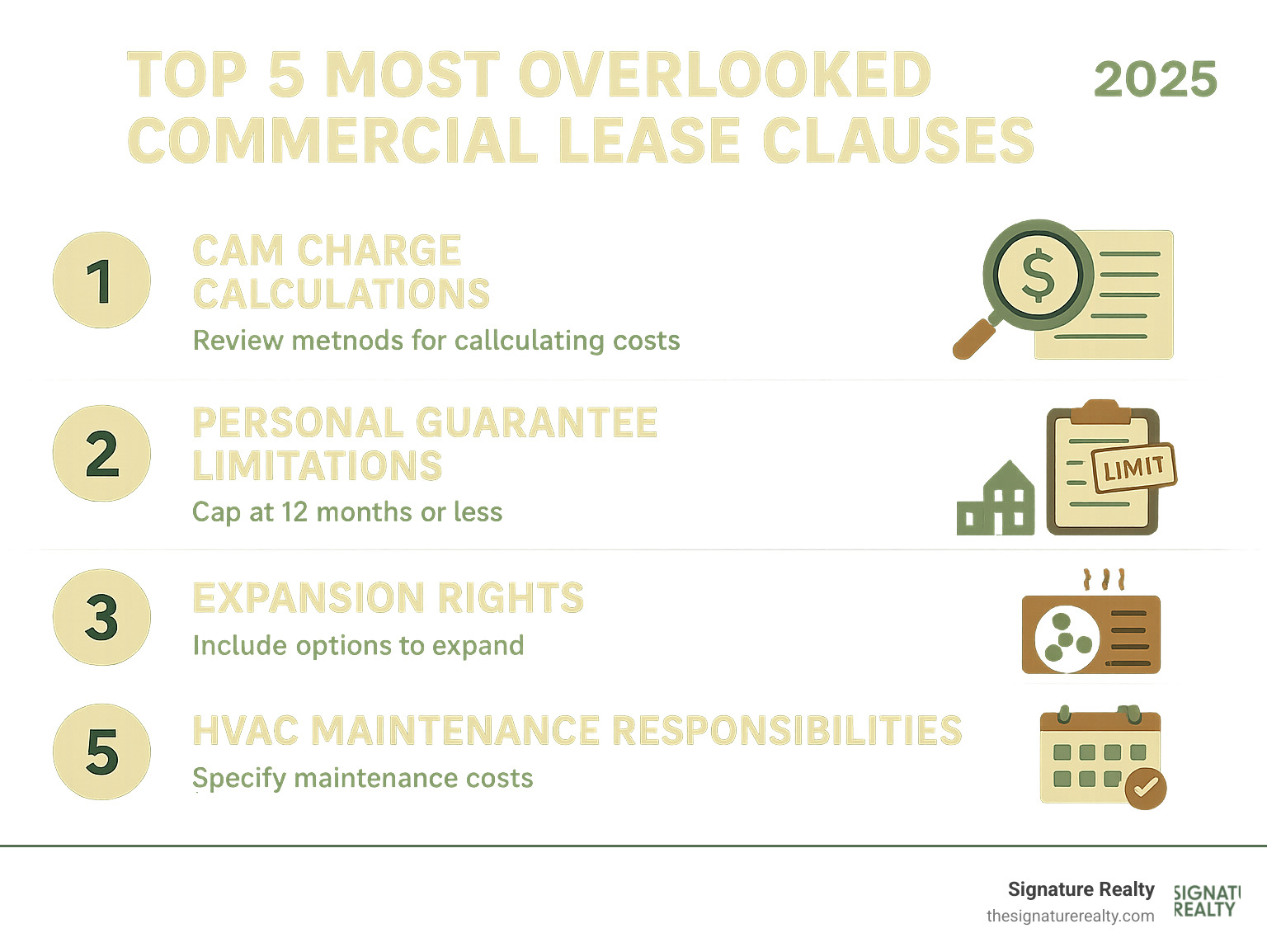
- Common Area Maintenance (CAM): Covers shared spaces. Always negotiate for audit rights and absolute caps on CAM charges to prevent surprise increases.
- Property Taxes & Insurance: In Florida, property taxes can jump significantly after a building is sold. Negotiate for transparency in how these costs are calculated and passed on to you.
Demand detailed annual estimates and audited statements to understand your total occupancy cost, not just the base rent.
Step 3: Essential Commercial Lease Negotiation Tips for Key Clauses

Standard leases heavily favor the landlord. Your goal is to rebalance key clauses to protect your business.
- Operating Costs: Negotiate to exclude capital improvements, structural repairs, and costs from landlord negligence from your share of expenses.
- Repair and Maintenance: Push back on attempts to make you responsible for major systems (like HVAC), structural issues, or normal wear and tear. In South Florida, clarifying HVAC responsibility is crucial; aim for landlord responsibility on major repairs.
- Hazardous Materials: Limit your liability to only materials your business introduces, protecting you from pre-existing environmental issues.
- Redevelopment & Relocation Clauses: These allow the landlord to terminate your lease or move you. Fight to remove them. If unavoidable, negotiate for long notice periods (6-12 months) and landlord-paid moving and business interruption costs.
- Default and Cure: Standard leases have harsh default terms. Negotiate for written notice and a reasonable cure period (e.g., 30 days) before penalties apply.
5 “Must-Negotiate” Clauses for Miami Tenants:
- CAM charges and operating expenses – demand transparency, audit rights, and absolute caps
- Repair and maintenance responsibilities – exclude structural, capital, and wear-and-tear items
- Personal guarantees – limit duration and dollar amounts, aim for “Good Guy” clauses
- Renewal options – clearly define notice periods and rent determination methods
- Redevelopment/relocation clauses – seek removal or robust protections with significant notice and landlord-covered costs
For a deeper dive, see our guide on the Commercial Lease Agreement Florida.
Step 4: Advanced Commercial Lease Negotiation Tips – Inducements and Flexibility
Advanced commercial lease negotiation tips focus on concessions and flexibility, which can dramatically improve your deal’s financial impact.
- Tenant Inducements: In markets with higher vacancy, like some Medley industrial or Hialeah retail areas, push for powerful inducements. This includes free rent periods (2-3 months) during your build-out and a generous Tenant Improvement (TI) allowance to fund customization. Learn How to Negotiate Free Rent for a Commercial Lease.
- Expansion Options: Plan for growth. A Right of First Refusal (ROFR) gives you first dibs on adjacent spaces, which is crucial for scaling companies in Miami.
- Flexibility Rights: Secure subletting and assignment rights so you can transfer your lease if business needs change. Ensure the landlord cannot unreasonably withhold consent.
- Retail Protections: For retail businesses in Doral or Miami shopping centers, negotiate co-tenancy clauses (allowing rent reduction if an anchor tenant leaves) and exclusivity clauses (preventing direct competitors from moving in nearby).
These strategies turn a rigid lease into a flexible tool that supports your company’s evolution.
Step 5: Protecting Your Future – Limiting Liability and Personal Guarantees
Protecting your personal assets is a top priority. Landlords often demand personal guarantees, making you liable if your business defaults.
The goal is to avoid or limit them. If a guarantee is required, negotiate for:
- Limited Duration: Cap the guarantee at 12 months or less.
- Dollar Amount Caps: Set a maximum on your personal financial exposure.
- “Good Guy” Clause: This terminates your personal guarantee if you provide proper notice, vacate the space, and are current on rent, even if the lease term isn’t over.
Also, negotiate other liability-limiting clauses:
- Security Deposits: Aim for an amount equal to one month’s rent and ask for “burn down” provisions that reduce the deposit over time.
- End-of-Term Restoration: Limit your move-out obligations to removing personal property and trade fixtures, not beneficial improvements that add value to the space. This avoids huge, unexpected costs.
- Demolition Clause: If a landlord exercises a demolition clause, negotiate for rent forgiveness or other compensation for the disruption. This can be part of a strategy for Negotiating a Commercial Lease Buyout.
These protections create a financial safety net for your business and personal assets.
Step 6: Avoiding Common Pitfalls and Planning Your Exit
Many business owners make costly mistakes by overlooking key details. Avoid these common pitfalls:
- Ignoring Renewal Terms: Don’t assume renewals are straightforward. Negotiate your lease renewal options upfront, defining notice periods and fair rent determination methods (like arbitration) to avoid future surprises. Our expertise in Negotiating a Commercial Lease Renewal is invaluable here.
- Overlooking Hidden Fees: Scrutinize the lease for administrative fees, marketing fund contributions, and other charges. Demand a detailed breakdown and negotiate to cap or eliminate them.
Most importantly, plan your exit strategy.
- Termination and Buyout Options: Negotiate termination clauses for specific circumstances (e.g., major sales decline) or a buyout option that allows you to end the lease early for a predetermined fee.
- Notice Periods: Ensure adequate notice periods (3-4 months minimum) for both tenant and landlord actions to allow for smooth transitions.
- Pandemic/Force Majeure Clauses: The pandemic highlighted the need for strong “force majeure” clauses that cover public health crises. A well-negotiated clause can provide rent abatement or termination rights during unforeseen disasters; 47% of companies paid full rent on empty spaces during the pandemic, a cost that could have been mitigated.
Proactively planning your exit makes your lease a flexible tool, not a rigid constraint.
Secure Your Advantage in the Miami Market

Commercial lease negotiation in South Florida is complex, but with this roadmap of commercial lease negotiation tips, you’re already ahead. A well-negotiated lease protects your cash flow, provides flexibility for growth, and prevents surprise costs. Every clause matters, whether you’re looking at retail space in Hialeah, a warehouse in Medley, or an office in Doral.
You don’t have to steer this alone. Long-term success in Miami’s market requires an expert team.
At Signature Realty, our 13+ years of experience in tenant representation is powered by a data-driven approach and a proprietary AI deal analyzer. This combination has saved our clients over $2 million by identifying opportunities and red flags that others miss. We provide the value of expert guidance to secure terms that support your business, not drain it.
Landlords expect you to negotiate. Let us help you do it effectively.
Ready to put these tips into action? Explore available lease properties in South Florida and let’s secure a lease that fuels your success.