
Your Business is Booming, Now What?
Finding the right commercial space for rent is one of the most critical decisions for growing businesses in Miami, Doral, Hialeah, and Medley, FL. Whether you’re expanding your boutique retail operation, scaling your e-commerce fulfillment center, or establishing a new medical practice, the process can feel overwhelming without proper guidance tailored to these local markets.
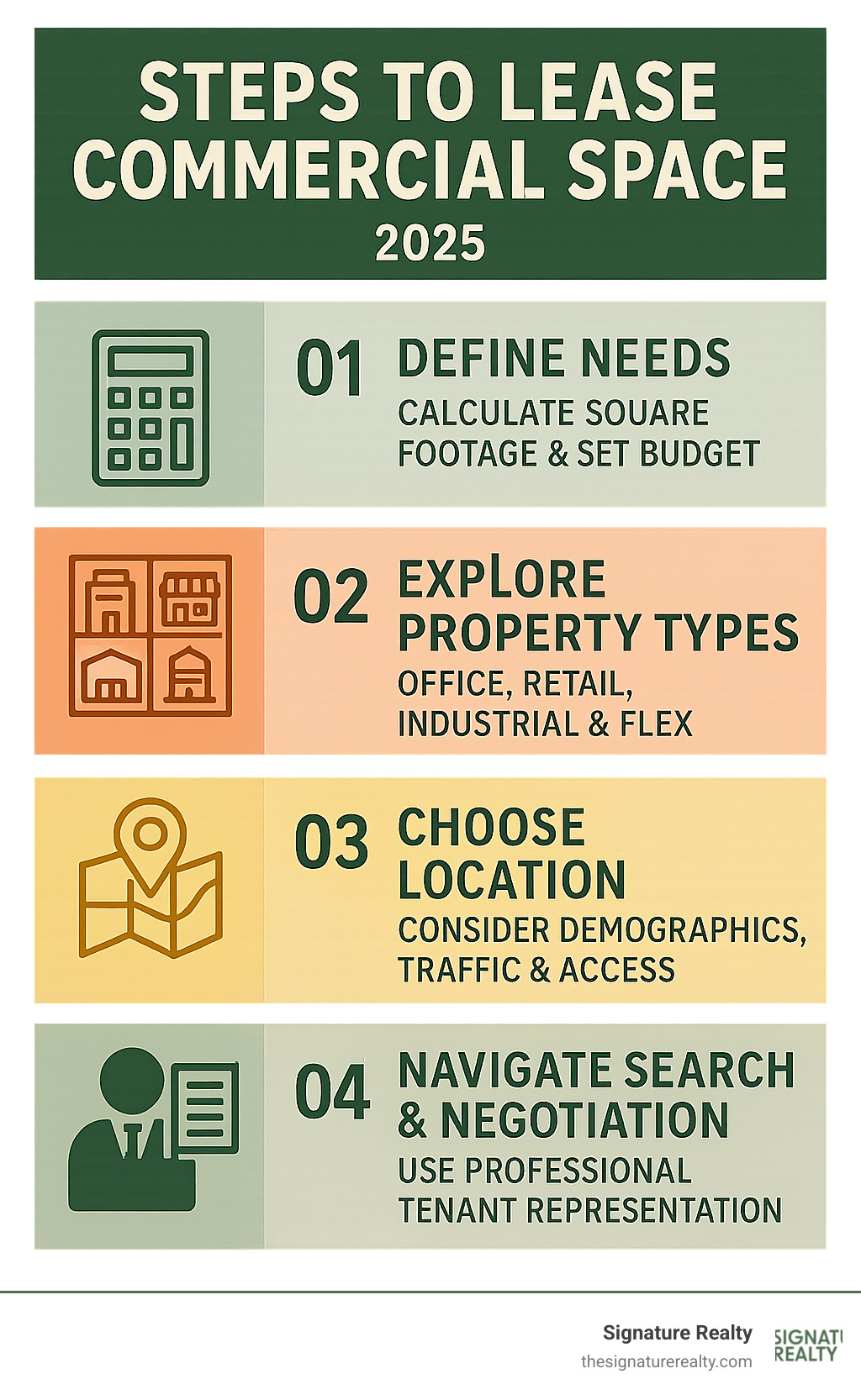
Key Steps to Finding Commercial Space for Rent:
- Define your needs – Calculate required square footage and establish budget parameters
- Choose property type – Office, retail, industrial, or flex space based on business operations
- Select strategic location – Consider foot traffic, logistics access, and target demographics
- Steer lease terms – Understand NNN, Modified Gross, and Full Service lease structures
In Miami-Dade County’s competitive market, businesses have access to diverse commercial opportunities across different submarkets. Miami offers high-visibility retail and office spaces, Doral features modern business parks and industrial facilities, Hialeah provides affordable retail storefronts with strong foot traffic, and Medley specializes in industrial and warehouse spaces with excellent logistics access. Navigating the specific zoning regulations for each area is a key part of the process, and you can find official information on the Miami-Dade County Zoning website.
The stakes are high when choosing your business headquarters. According to market data, the average commercial rental rate in Miami is $25.00 per square foot annually, with significant variations based on location, property type, and lease structure. Making the wrong choice can impact your bottom line for years.
I’m Brett Sherman, and I’ve helped hundreds of businesses secure optimal commercial spaces throughout Miami, Doral, Hialeah, and Medley using AI-driven market analysis and exclusive off-market deals. My experience in commercial space for rent negotiations has saved clients over $2 million in lease costs while securing strategic locations that support long-term growth.
Commercial space for rent word roundup:
A Step-by-Step Guide to Finding Commercial Space for Rent
Starting on the journey to find the perfect commercial space for rent can feel like searching for a needle in a haystack, especially in a busy market like Miami-Dade. But with a strategic approach, a clear understanding of your needs, and the right guidance, we can turn this daunting task into an exciting quest for your business’s next home. Let’s break down the process into actionable steps.
Step 1: Defining Your Business Needs and Budget
Before we even start looking at listings, it’s crucial to get crystal clear on what your business actually needs. This isn’t just about finding any space; it’s about finding the right space that will support your growth, improve your operations, and fit your financial reality.
First, let’s conduct a thorough business needs analysis. Ask yourselves:
- What is the primary function of this space? Is it customer-facing retail, a quiet office environment, a busy warehouse, or a combination?
- How many employees will regularly occupy the space now, and how many do we anticipate in the next 3-5 years?
- Do we have specialized equipment that requires specific power, plumbing, or ventilation?
- What are our operational flow requirements? Do we need a loading dock, large open areas, or multiple private offices?
Next, we move to square footage calculation. This is more art than science, but a good starting point is to consider your current operations and future growth. For office space, a common guideline is 100-200 square feet per employee, but this can vary based on your industry and desired office layout (e.g., open plan vs. private offices). For retail, consider inventory, display areas, and customer flow. For industrial, think about storage capacity, machinery, and shipping/receiving needs. While average commercial property sizes in major metropolitan areas can range from small retail units of a few hundred square feet to large industrial facilities exceeding 100,000 square feet, your specific needs will dictate your ideal size.
Once we have a rough idea of size, we need to talk about budgeting for rent. The advertised rental rate is often just the beginning. When looking for commercial space for rent, you need to understand the full financial picture. Beyond the base rent, consider additional costs such as utilities, property taxes, building insurance, and common area maintenance (CAM) charges. These “additional” costs can significantly impact your monthly outlay.
Understanding rental rates is key. Commercial properties are typically quoted in dollars per square foot per year ($/SF/YR). So, if a space is 1,000 SF and the rate is $25.00/SF/YR, your annual base rent would be $25,000, or $2,083.33 per month. However, this base rent is just one piece of the puzzle, especially when we dig into different lease types.
There are three primary types of commercial leases we often encounter:
- Triple Net (NNN) Lease: This is perhaps the most common for retail and industrial properties. Under an NNN lease, the tenant pays a base rent plus their proportional share of the property’s operating expenses, which include property taxes, building insurance, and common area maintenance (CAM). Essentially, you pay for your space and a slice of the building’s overhead. This offers transparency but can lead to fluctuating monthly costs if operating expenses change.
- Modified Gross Lease: This is a hybrid. The tenant pays a base rent plus a proportional share of some operating expenses, while the landlord covers others. For example, the tenant might pay for utilities and janitorial services, while the landlord covers property taxes and insurance. The specific expenses covered by each party are negotiable and clearly outlined in the lease agreement. This provides a balance between predictable costs and tenant control over some expenses.
- Full Service Lease (or Gross Lease): Often found in multi-tenant office buildings, a full service lease means the tenant pays a single, all-inclusive rent amount. The landlord is responsible for all operating expenses, including property taxes, insurance, common area maintenance, utilities, and often even janitorial services. This offers the most predictable monthly cost for the tenant, simplifying budgeting.
Understanding these distinctions is vital for effective budgeting and negotiation. Knowing what’s included and what’s not can make a significant difference in your total occupancy cost. We always advise our clients to clarify every line item. For a deeper dive into making the most of your lease negotiations, check out our guide on How to Negotiate a Commercial Lease Agreement.
Here’s a quick comparison of the responsibilities under each lease type:
| Lease Type | Tenant Responsibilities “`
Introduction: Your Business is Booming, Now What?
Finding the right commercial space for rent is one of the most critical decisions for growing businesses in Miami, Doral, Hialeah, and Medley, FL. Whether you’re expanding your boutique retail operation, scaling your e-commerce fulfillment center, or establishing a new medical practice, the process can feel overwhelming without proper guidance tailored to these local markets.
Key Steps to Finding Commercial Space for Rent:
- Define your needs – Calculate required square footage and establish budget parameters
- Choose property type – Office, retail, industrial, or flex space based on business operations
- Select strategic location – Consider foot traffic, logistics access, and target demographics
- Steer lease terms – Understand NNN, Modified Gross, and Full Service lease structures
In Miami-Dade County’s competitive market, businesses have access to diverse commercial opportunities across different submarkets. Miami offers high-visibility retail and office spaces, Doral features modern business parks and industrial facilities, Hialeah provides affordable retail storefronts with strong foot traffic, and Medley specializes in industrial and warehouse spaces with excellent logistics access.
The stakes are high when choosing your business headquarters. According to market data, the average commercial rental rate in Miami is $25.00 per square foot annually, with significant variations based on location, property type, and lease structure. Making the wrong choice can impact your bottom line for years.
I’m Brett Sherman, and I’ve helped hundreds of businesses secure optimal commercial spaces throughout Miami, Doral, Hialeah, and Medley using AI-driven market analysis and exclusive off-market deals. My experience in commercial space for rent negotiations has saved clients over $2 million in lease costs while securing strategic locations that support long-term growth.
Commercial space for rent word roundup:
A Step-by-Step Guide to Finding Commercial Space for Rent
Searching for the perfect commercial space for rent in Miami-Dade County doesn’t have to feel overwhelming. With the right approach and clear understanding of your needs, you can transform this challenge into an exciting opportunity to find your business’s ideal home. Let me walk you through the essential steps that will set you up for success.
Step 1: Defining Your Business Needs and Budget
Before you start browsing listings or driving around neighborhoods, take a step back and get crystal clear on what your business actually needs. This foundation work will save you countless hours and prevent costly mistakes down the road.
Start with a thorough business needs analysis. Consider your primary function – are you running a customer-facing retail operation, managing a quiet office environment, operating a busy warehouse, or perhaps combining multiple functions? Think about your current team size and realistic growth projections for the next 3-5 years. Don’t forget about specialized requirements like equipment that needs specific power, plumbing, or ventilation systems.
Your operational flow is equally important. Do you need a loading dock for deliveries? Large open areas for manufacturing? Multiple private offices for client meetings? These details will significantly narrow your search and help you avoid spaces that look perfect but don’t actually work for your business.
Square footage calculation requires balancing current needs with future growth. For office spaces in Miami and Doral, a common starting point is 100-200 square feet per employee, though this varies based on your industry and preferred layout. Retail spaces in high-traffic areas like Hialeah need careful consideration of inventory storage, display areas, and customer flow patterns. Industrial operations in Medley should factor in storage capacity, machinery placement, and shipping/receiving requirements.
Now let’s talk about the financial reality. Budgeting for rent goes far beyond the advertised rate. Commercial properties are typically quoted in dollars per square foot per year ($/SF/YR). If you’re looking at a 1,000 square foot space at $25.00/SF/YR, your annual base rent would be $25,000, or about $2,083 per month. However, this is just the starting point.
Understanding lease types is crucial for accurate budgeting. Triple Net (NNN) leases are common for retail and industrial properties, especially in areas like Medley’s industrial corridor. With NNN, you pay base rent plus your share of property taxes, building insurance, and common area maintenance (CAM). This offers transparency but can lead to fluctuating monthly costs.
Modified Gross leases split expenses between tenant and landlord. You might handle utilities and janitorial while the landlord covers taxes and insurance. This arrangement is popular in Doral’s business parks and provides a balance between cost predictability and tenant control.
Full Service leases, often found in Miami’s multi-tenant office buildings, include everything in one monthly payment. The landlord handles all operating expenses, utilities, and often janitorial services. This simplifies budgeting but may cost more upfront.
For expert guidance on maximizing your lease negotiations, check out our comprehensive guide on How to Negotiate a Commercial Lease Agreement.
Here’s a quick comparison of lease responsibilities:
| Lease Type | Tenant Responsibilities | Landlord Responsibilities |
|---|---|---|
| Triple Net (NNN) | Base rent + property taxes + insurance + CAM + utilities | Property management, major repairs |
| Modified Gross | Base rent + selected expenses (negotiable) | Remaining operating expenses |
| Full Service | Base rent only | All operating expenses, utilities, maintenance |
Understanding these distinctions will help you compare properties accurately and avoid budget surprises. Always clarify what’s included and what’s additional – these details can significantly impact your total occupancy cost in Miami-Dade’s competitive market.