
Restaurant Lease Negotiation: 6 Winning Steps
Why Restaurant Lease Negotiation Can Make or Break Your Miami Business
Restaurant lease negotiation is a critical, high-stakes decision where many new owners stumble. A bad lease can cripple a business before it even opens, especially in competitive markets like Miami, Doral, Hialeah, and Medley.
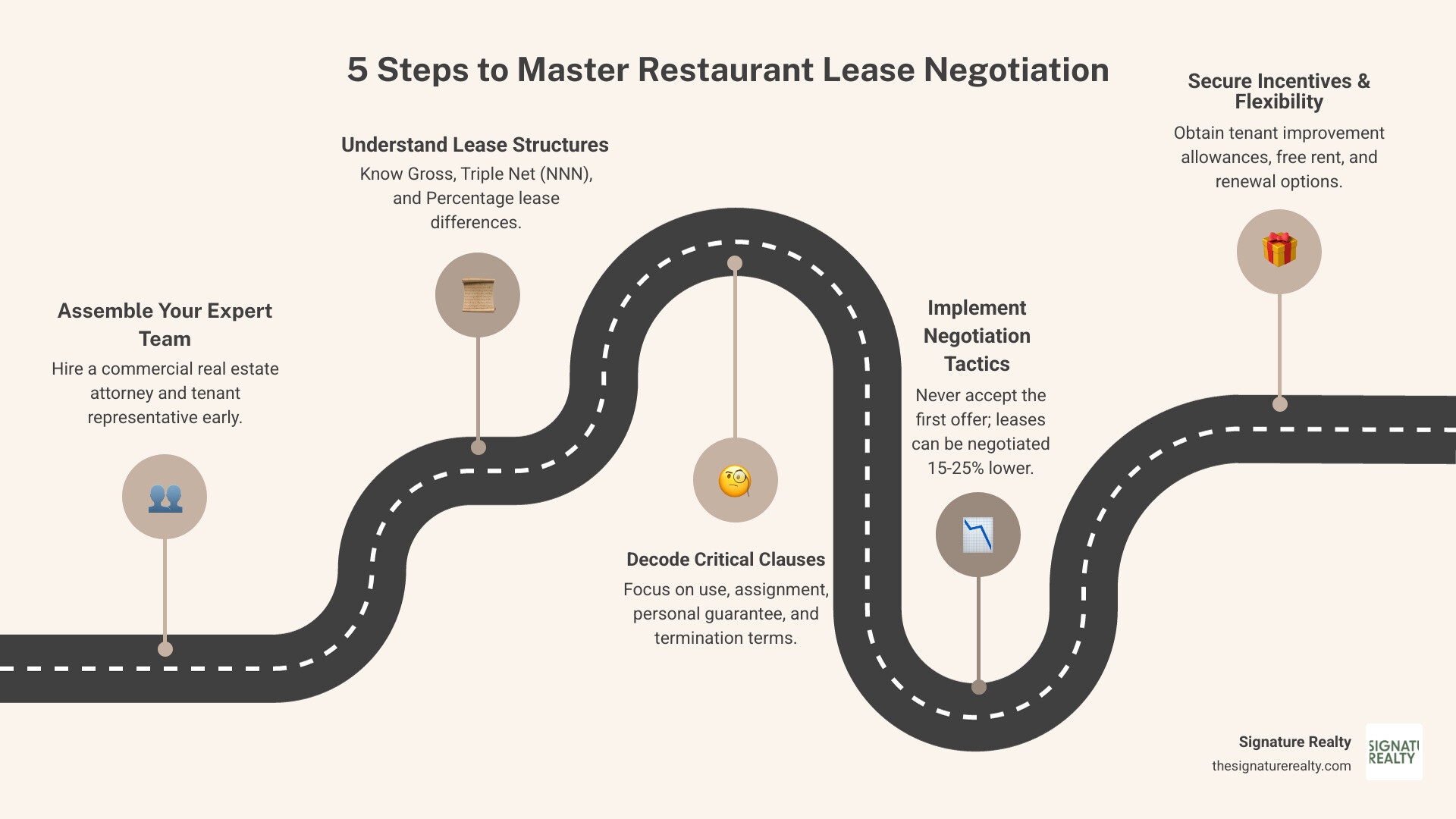
Key Steps for Successful Restaurant Lease Negotiation:
- Assemble your team early – Hire a commercial real estate attorney and tenant representative before signing anything.
- Understand lease types – Know the difference between gross, triple net (NNN), and percentage leases.
- Negotiate key clauses – Focus on use clauses, assignment rights, personal guarantees, and termination terms.
- Secure tenant incentives – Ask for build-out allowances, free rent periods, and renewal options.
- Review “delivery of premises” – Ensure HVAC, electrical, and gas capacity meet restaurant requirements.
- Never accept the first offer – Leases are typically negotiated 15-25% below the opening offer.
- Plan for flexibility – Include sublease rights and expansion options in case your concept needs to pivot.
With up to 80% of restaurants failing within three years, unfavorable lease terms are a major contributing factor. Yet, savvy operators can secure leases at 15-25% below the asking price. The challenge is that you’re negotiating against seasoned professionals. Landlords and their agents have market leverage and experience that most restaurateurs lack, putting you at a significant disadvantage.
As Signature Realty, we guide restaurant operators through complex lease negotiations across South Florida. Using AI-driven market analysis and tenant representation expertise, we help clients secure favorable terms and avoid costly mistakes in restaurant lease negotiation, leveling the playing field.
Restaurant lease negotiation terms to know:
- how to negotiate a commercial lease for retail space
- commercial lease terms
- how to negotiate free rent for a commercial lease
Mastering Your Restaurant Lease Negotiation in Miami
Starting a new restaurant in South Florida is exciting, but the right lease is paramount. It’s the foundation for long-term success. Let’s explore the essential steps to master your restaurant lease negotiation.
Step 1: Assembling Your Ingredients – Budget, Location, and Team
Before looking at properties in Miami, Doral, Hialeah, or Medley, proper preparation is key.
Budgeting for Your Culinary Dream
A realistic budget is more than just rent. While restaurateurs typically budget 5-10% of projected revenue on fixed costs, South Florida leases can include hidden expenses. Watch for unexpected “promotional” fees or “phantom space,” where landlords inflate square footage. We help you measure accurately to ensure you only pay for usable areas.
Location, Location, Location: Beyond Just Foot Traffic
In areas like Doral or Hialeah, the right location involves more than foot traffic. Key factors include:
- Demographics: Does the local population match your target customer?
- Competition: Is there a gap in the market for your concept?
- Accessibility & Parking: Can customers easily reach you?
- Business Turnover: High turnover can be a red flag.
- Space Allocation: Most restaurants need about 40% for service and back-of-house areas.
Your Dream Team: Professionals Who Have Your Back
Negotiating a lease without experts is a major risk.
- Commercial Real Estate Agent (Tenant Representative): As tenant representatives at Signature Realty, we work exclusively for you. With 13+ years of South Florida experience and a proprietary AI deal analyzer, we provide a data-driven edge to secure the best terms, saving clients over $2 million in negotiations.
- Real Estate Attorney: A lawyer experienced in commercial leases is essential from the start. They review complex legal documents to protect you from hidden liabilities.
- Designer, Architect, and General Contractor: These professionals assess a space’s functionality, evaluating infrastructure (HVAC, electrical) and estimating build-out costs to prevent expensive surprises.
Step 2: Choosing Your Cooking Method – Understanding Lease Structures
Different commercial leases have different impacts on your budget. Understanding them is key to a successful restaurant lease negotiation.
| Lease Type | What You Pay | Pros | Cons |
|---|---|---|---|
| Gross Lease | Fixed monthly rent (landlord covers property taxes, insurance, maintenance, utilities). | Predictable monthly expenses. Easier budgeting. | Higher base rent. Less control over property maintenance. |
| Net Lease | Base rent + some operating expenses (e.g., property taxes). | Lower base rent. | Expenses can fluctuate, making budgeting harder. |
| Triple Net (NNN) Lease | Base rent + property taxes, insurance, and maintenance. | Lowest base rent. More control over expenses. | Tenant bears all risks of fluctuating operating costs (e.g., rising property taxes or insurance premiums). |
| Percentage Lease | Base rent + a percentage of gross sales (after a certain threshold). | Lower initial rent, especially for startups. Landlord incentivized by your success. | Can significantly impact profitability if sales are high. Requires regular sales reporting to landlord. |
| Variable Lease | Rent fluctuates based on an agreed-upon index. | Flexibility for both parties in changing market conditions. | Unpredictable rent increases or decreases. |
Buying vs. Leasing: What’s Right for Your Miami Eatery?
Given the high failure rate of new restaurants, leasing is often the smarter choice in Miami-Dade County. It offers lower upfront costs, greater flexibility to adapt or exit, and preserves capital for operations. Buying is typically better for established, stable concepts with a proven track record. In South Florida’s high-value market, leasing allows for quicker entry with less financial risk.
Step 3: Decoding the Fine Print – Key Clauses for Your Restaurant Lease Negotiation
Every clause in the lease agreement matters. We scrutinize these to protect our clients:
- Use Clause: Defines what you can do in the space. We negotiate for flexibility to allow for menu changes or concept pivots.
- Assignment and Subletting: Your exit strategy. This clause allows you to transfer the lease if you sell or close your business. Without it, you could be stuck paying rent on an empty space.
- Personal Guarantee (PG): Makes you personally liable for the lease—a huge risk. We work to minimize or eliminate PGs, or negotiate terms like a “rolling guarantee” that limits your liability.
- Exclusivity Clause: Prevents the landlord from leasing to a direct competitor in the same complex, which is crucial in Miami’s shopping centers.
- Termination Clause: Outlines conditions for early termination. We watch for “demolition clauses” and negotiate for longer notice periods and rent forgiveness during force majeure events.
- CAM (Common Area Maintenance) Charges: Your share of maintaining shared spaces. We scrutinize these calculations to prevent inflated charges.
- Build-Out Details and “Delivery of Premises”: Standard leases often don’t cover a restaurant’s needs for HVAC, electrical, or plumbing. We ensure the lease specifies what the landlord will provide, preventing massive unexpected costs for items like a “black iron” kitchen exhaust system.
Step 4: The Art of the Deal – Negotiation Tactics and Strategy
With the right strategy, you can win your restaurant lease negotiation.

Never Accept the First Offer
Landlords expect you to negotiate. Our experience shows we can often secure leases at 15 to 25 percent less than the opening offer. Always make a strong counter-offer.
Patience is a Weapon
Don’t be rushed. The party in a hurry makes the most concessions. Take time for due diligence and thoughtful counter-proposals.
Know When to Walk Away
Your most powerful tool is the willingness to walk away from a bad deal. In a market like Miami, other opportunities exist. Our AI deal analyzer can quickly assess alternatives, giving you the confidence to hold your ground.
Understand the Landlord’s Perspective
Landlords want stable, long-term tenants. Demonstrating a solid business plan and financial stability gives you leverage. We help you present your best case to foster a collaborative approach that yields better terms.
Do Your Research
We conduct extensive market research in Miami, Doral, Hialeah, and Medley to understand comparable rents, vacancy rates, and typical incentives. Talking to other tenants can also provide invaluable insights.
Step 5: Adding the Garnish – Securing Incentives and Planning for Growth
A great restaurant lease negotiation secures valuable incentives and plans for the future.
Tenant Inducements: Sweetening the Deal
Landlords offer perks to attract good tenants. We help you negotiate for:
- Tenant Improvement (TI) Allowance: A sum of money from the landlord to help cover renovation costs, offsetting your upfront capital needs.
- Free Rent Periods: Several months of free rent to cover your build-out phase before you open for business.
- Landlord-Funded Upgrades: Landlord-paid improvements, such as upgrading the HVAC or electrical systems for a commercial kitchen.
Planning for Future Growth
Your lease should anticipate your success.
- Renewal Options: The right to renew your lease provides long-term stability. We aim for an initial 5-10 year term with renewal options.
- Right of First Refusal (ROFR): Gives you the first chance to lease an adjacent space if it becomes available, allowing for easy expansion.
- Flexibility for Concept Evolution: Your lease should permit changes to your signage, design, and concept so you can adapt to market trends.
Step 6: Avoiding Kitchen Nightmares – Common Pitfalls in Restaurant Lease Negotiation
A bad lease can ruin a great concept. Here are common pitfalls we help clients avoid in the Miami-Dade market.
- ‘Phantom Space’: Always measure the usable square footage yourself. Don’t trust the landlord’s numbers and pay for space that isn’t usable.
- Being Rushed: A rushed deal is a bad deal. Never let an agent pressure you into signing before completing due diligence.
- Mixed-Use Project Challenges: Restaurants in Miami’s mixed-use projects face unique rules on operating hours, signage, and common area costs. We review these carefully to ensure they fit your business model.
- Late Lease Renewal: Start renewal negotiations 12 to 15 months before your current lease expires to maintain leverage and explore alternatives.
- Ignoring Infrastructure: A common trap is signing a lease only to find the HVAC, electrical, or plumbing is inadequate for a restaurant, leading to massive, unexpected costs. Always have your contractor inspect the space first.
- Lack of Professional Help: The biggest pitfall is going it alone. Landlords have professional agents; you need an experienced tenant representative and attorney on your side.
Secure Your Success with Expert Representation
Navigating restaurant lease negotiation in Miami, Doral, Hialeah, and Medley requires local knowledge and expert guidance. Getting your lease right builds a resilient foundation for your restaurant’s future.
At Signature Realty, we are your trusted partner. With 13+ years of experience in the South Florida market, our data-driven strategies and proprietary AI deal analyzer streamline the process, saving you time and money. We understand the nuances of the Miami-Dade market and leverage that knowledge for your benefit.
Don’t let an unfavorable lease jeopardize your success. Partner with us to craft a lease agreement that sets you up for long-term prosperity in South Florida’s vibrant culinary scene.