
Why Retail Strip Centers Dominate Miami’s Commercial Landscape
Retail strip centers are the backbone of South Florida’s commercial real estate market. These open-air shopping developments, a row of stores with shared parking, have proven their resilience by growing to over 68,000 nationwide by 2024.
Quick Answer: What is a Retail Strip Center?
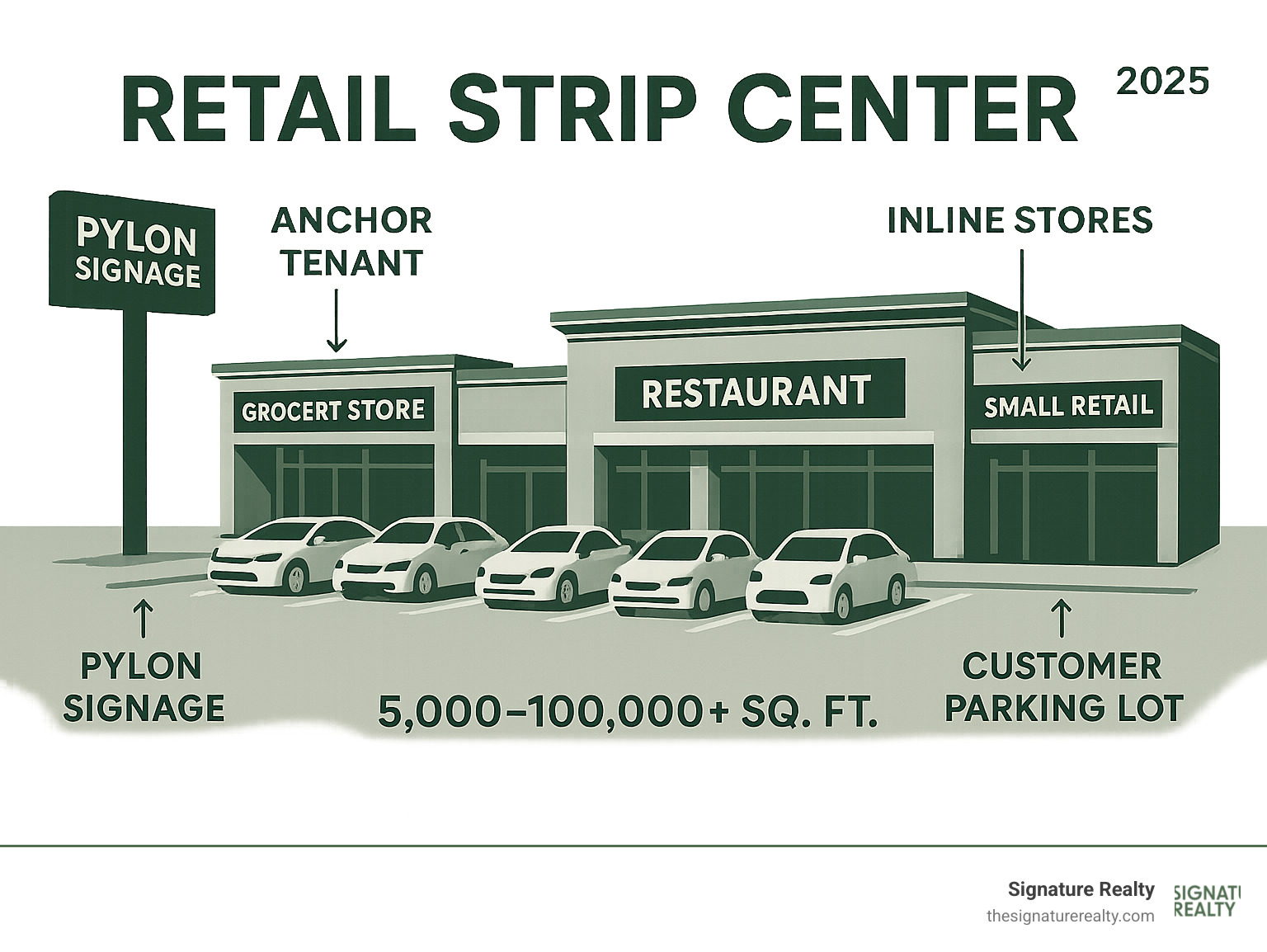
- Definition: A one-story building housing 2-20 retail tenants (500-4,000 sq ft each) with common parking
- Size Range: Typically 5,000 to 100,000+ square feet
- Format: Open-air with stores facing outward toward parking lots
- Types: Neighborhood centers, community centers, and power centers
- Common Anchors: Grocery stores, pharmacies, or big-box retailers
- Success Factors: Location, visibility, tenant mix, and adequate parking
In Miami-Dade County, these centers are convenient hubs in neighborhoods from Doral to Medley. They have weathered the e-commerce storm by focusing on service-based tenants and necessity retailers that can’t be replicated online. The investment appeal is clear: Blackstone’s recent $4 billion acquisition of Retail Opportunity Investments signals strong institutional confidence in these “necessity-based” assets.
I’m Brett Sherman, and I’ve helped dozens of clients steer retail strip center investments and leases across Miami, Doral, Hialeah, and Medley using data-driven strategies and AI-powered market analysis. My experience shows that success comes from understanding local demographics, traffic patterns, and tenant needs in each unique micro-market.
Similar topics to Retail strip center:
- Miami commercial real estate
- Miami investment properties
- Commercial property for rent in Miami Florida
What Defines a Strip Mall?
A retail strip center, or strip mall, is a distinct commercial property type. Unlike enclosed malls, a strip mall is an open-air format with a row of stores facing a large parking lot, usually along a major road. This design prioritizes convenience, allowing shoppers to park directly in front of the stores they wish to visit.
These centers are typically single-story structures housing anywhere from two to twenty tenants, with sizes ranging from 5,000 to over 100,000 square feet. In areas like Doral and Hialeah, these centers have adapted to changing consumer needs by housing essential services like grocery stores, salons, and restaurants, making them vital community hubs. For more on their history, see this article: A Brief History of the Mini-Mall.
The Different Flavors of Strip Centers
Retail strip centers come in various types, each serving different needs. Understanding these is crucial for investors and tenants.
- Neighborhood Centers: The most common type (30,000-125,000 sq ft), anchored by a grocery store or pharmacy. They serve a local population (1-3 mile radius) with daily necessities, like a Publix-anchored plaza in Miami.
- Community Centers: Larger (150,000-350,000 sq ft) with multiple anchors like a grocery store and a discount department store. They serve a wider area (3-6 miles), such as the large centers in Hialeah or along major Doral thoroughfares, and offer a broader range of goods.
- Power Centers: The largest format (250,000-600,000+ sq ft), dominated by big-box retailers like Walmart or Target. They are destination shopping hubs for a regional market (5-10 miles), such as CityPlace Doral.
The presence of an anchor tenant significantly influences foot traffic. The International Council of Shopping Centers (ICSC) provides a detailed classification system for these properties. You can explore their details here: US Center Classification. The right tenant mix is key; a neighborhood center in Hialeah needs local services, while a power center in Medley requires national brands. Our expertise helps clients find the right fit.
The Investor’s Blueprint to a South Florida Retail Strip Center
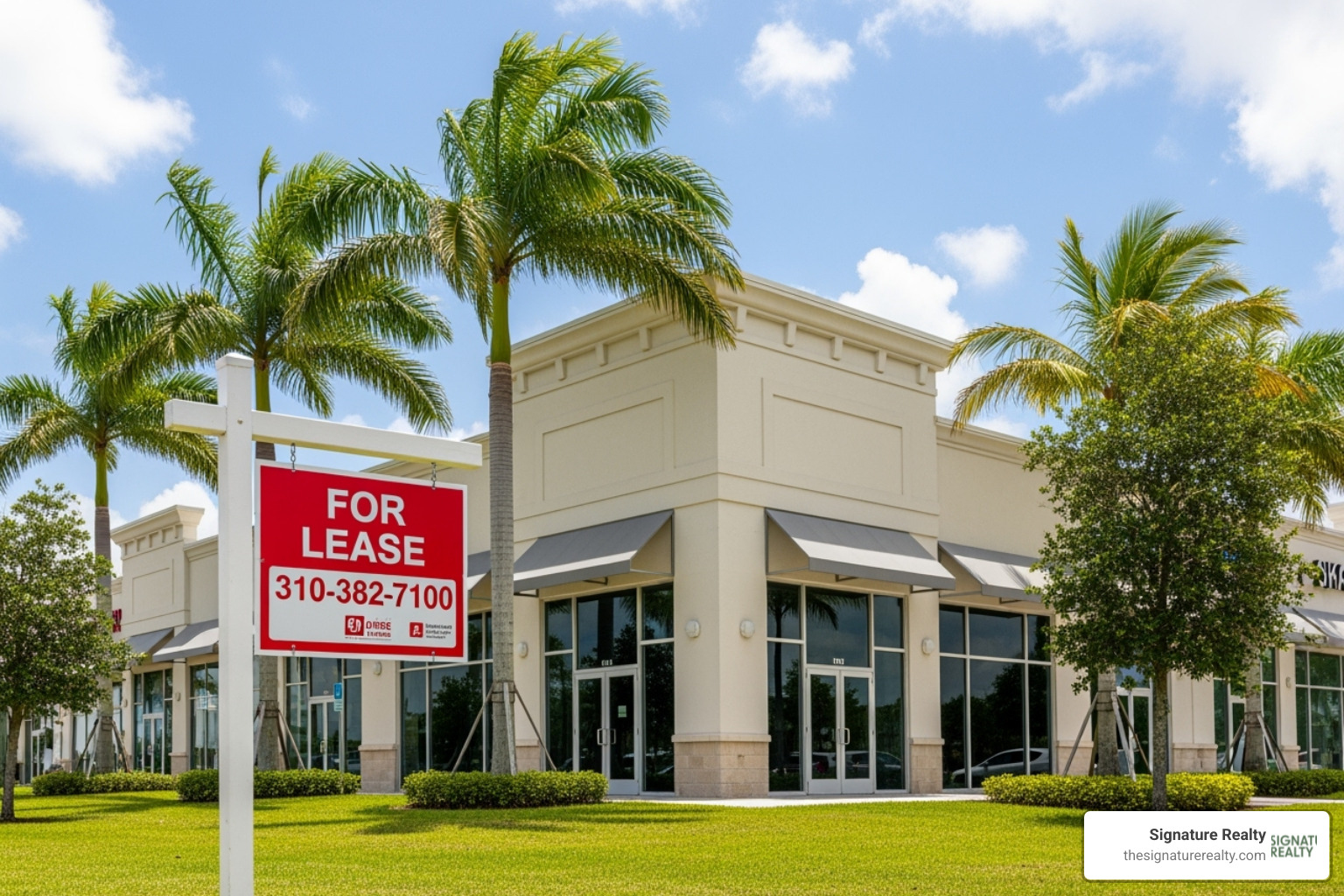
In an age of digital assets, tangible, income-producing properties like retail strip centers offer a stability many investors crave. The smart money agrees. Blackstone’s $4 billion investment in Retail Opportunity Investments signals strong institutional confidence, and CBRE projects at least $10 billion in open-air retail portfolios will trade in 2025. This reflects what we see in Miami-Dade: demand for well-located properties consistently outstrips supply.
Unlike volatile stocks, a well-positioned retail strip center in Doral or Medley generates reliable monthly rent. It’s real estate you can touch, improve, and watch grow. For investors exploring the landscape, we’ve compiled insights at Miami Investment Properties.
Evaluating a Miami Retail Strip Center for Purchase
Evaluating a potential retail strip center is detective work where details determine returns.
- Location Analysis: Everything starts here. We analyze traffic counts, visibility, and accessibility. A center on a busy Miami street will perform differently than one in a quiet neighborhood.
- Demographics: Who are the shoppers? The customer base in Medley’s industrial corridor differs from families in Doral. We analyze income, population density, and spending patterns to predict which tenants will thrive.
- Property Condition: We look beyond fresh paint to assess roof age, HVAC maintenance—a critical factor in Miami’s climate—and parking lot integrity. Deferred maintenance can lead to significant capital expenditures.
- Tenant Quality and Leases: We look for stable tenants on long-term triple net (NNN) leases, which pass operating costs to tenants. We also analyze tenant synergy, ensuring the mix is right for the specific demographics in a Doral or Hialeah neighborhood, and check for restrictive use clauses.
- Vacancy Rates: A 10% vacancy might be acceptable in a competitive Medley submarket averaging 15%, but if the center was previously at 95%, we investigate why tenants left.
- Redevelopment Potential: Older centers on large parcels, common in areas like Hialeah, can offer long-term value through expansion or mixed-use conversion.
Common pitfalls include insufficient parking, poor visibility, and unfocused tenant mixes. For a guide on avoiding these errors, review The Ten Most Common Pitfalls In Strip Shopping Center Development.
The E-Commerce Effect and Resilient Tenant Strategies

The e-commerce “threat” didn’t kill retail strip centers; it made them smarter. Strip centers in Doral, Hialeah, and across Miami-Dade adapted by focusing on what Amazon can’t deliver: services and experiences.
This sparked a shift to “e-commerce proof” tenants. Smart landlords now recruit businesses that require a physical presence:
- Medical and Wellness: Clinics, dental offices, and fitness studios build communities and provide essential services.
- Personal Services: Nail salons, barbershops, and dry cleaners generate steady, loyal foot traffic.
- Food and Beverage: Restaurants and cafes offer experiences beyond simple consumption.
Necessity-based anchors like grocery stores (Publix, Sedano’s) and pharmacies remain powerhouses, generating consistent traffic that benefits all tenants. Foot traffic to grocery stores, for instance, was 12% higher in Q3 2024 than in Q3 2019. The market has recognized this resilience, with investors embracing these practical, profitable assets, as noted by the Wall Street Journal: Why “Unflashy” Strip Malls Are All the Rage for Retail.
For businesses seeking the right location in this service-focused environment, strategic positioning is key. Our team specializes in matching tenants with properties for long-term success. Learn more about our approach at Retail Tenant Rep.
Navigating Challenges and Future Opportunities
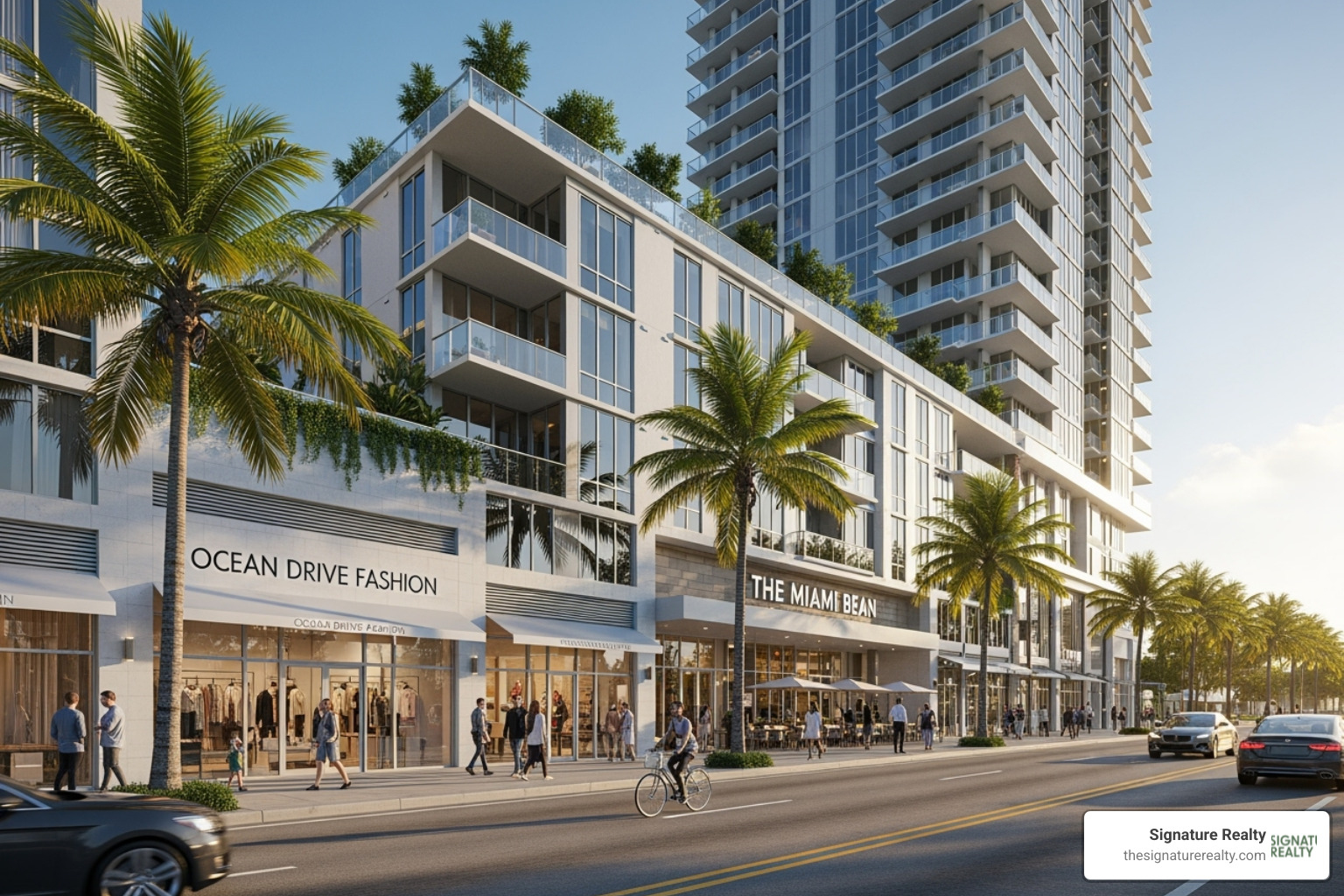
Owning a retail strip center in Miami comes with challenges, but they are manageable, and the future opportunities are exciting. Key issues include tenant turnover, which can trigger co-tenancy clauses, ongoing maintenance costs from Miami’s climate, and the negative perception of vacancies.
However, the future for retail strip centers in South Florida is bright. A fascinating mixed-use redevelopment trend is taking hold, with developers adding residential units above retail to create vibrant live-work-play communities. In areas like Hialeah and Medley, adaptive reuse is changing outdated centers into modern developments that command premium rents.
The key to success is proactive management. Successful owners maintain strong tenant relationships, keep properties in excellent condition, and work with experienced brokers. For owners looking to maximize their investment, our landlord representation services are invaluable: More info about Retail Landlord Representation.
Maximizing Your Investment and Overcoming Problems
A well-managed retail strip center in Miami offers stable cash flow and lower operating costs, especially with NNN leases where tenants cover most expenses. However, risks like tenant concentration (over-reliance on one anchor) and competition from new developments in areas like Doral must be managed.
Overcoming these challenges requires a strategic tenant mix. We focus on attracting complementary, e-commerce-proof businesses that create synergy. A medical clinic in a Doral center can drive daytime traffic to a cafe, while an evening fitness studio in a Hialeah plaza supports a neighboring smoothie bar.
Proactive vacancy management is our specialty. Using our proprietary AI deal analyzer, we predict market trends and identify potential tenant issues before they become costly vacancies. We don’t just fill spaces; we curate tenant mixes that strengthen the entire center.
Our data-driven strategies have saved clients over $2 million in lease negotiations by identifying optimal rental rates and uncovering off-market deals. In competitive markets like Doral and Miami, this access is a significant advantage.
Working with a skilled brokerage that understands the Miami Commercial Real Estate Market is essential. Whether you’re acquiring your first retail strip center or optimizing a portfolio across Miami, Doral, Hialeah, and Medley, we turn challenges into profitable opportunities. Strip centers are evolving and thriving, and with the right strategy, your investment can be a success story.