
Triple Net Rent Explained: Don’t Get Caught in the Net
What is Triple Net Rent?
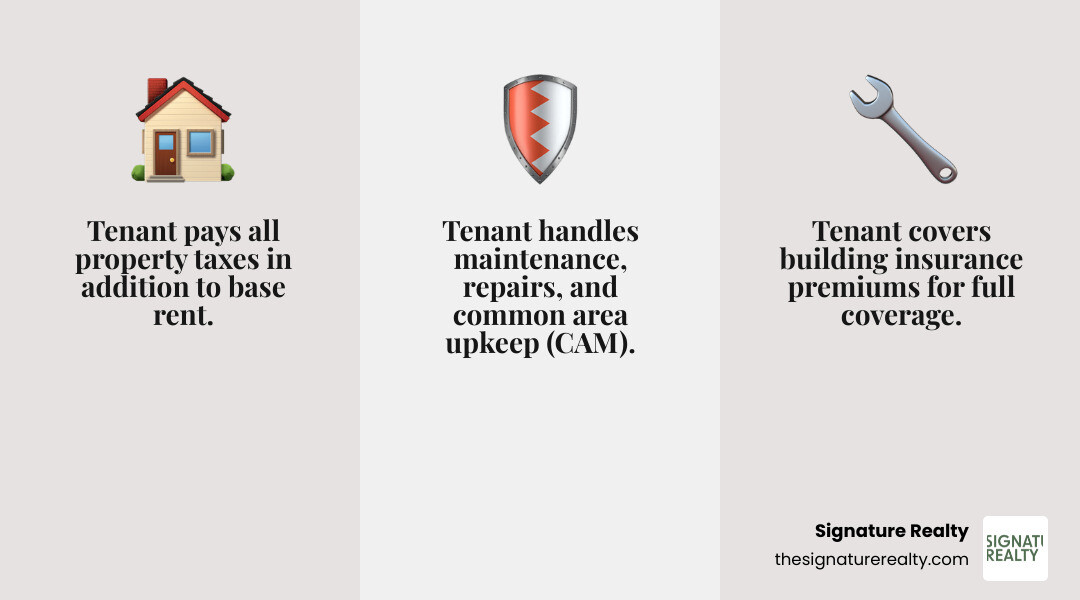
Triple net rent refers to a commercial lease where the tenant pays a base rent plus three main property operating expenses:
- Property Taxes: The tenant is responsible for the property’s annual real estate taxes.
- Building Insurance: The tenant covers the insurance premiums for the building.
- Maintenance: This includes general upkeep, repairs, and often common area maintenance (CAM) for shared spaces.
In a triple net lease, also known as an NNN lease, the tenant takes on a significant portion of the financial responsibility for the property’s ongoing costs. This structure is common in commercial real estate across South Florida, including busy areas like Miami, Doral, Hialeah, and Medley, FL. It shifts many of the property’s operating expense risks from the landlord to the tenant, impacting everything from cash flow to property valuation.
I’m Brett Sherman, and I bring a wealth of experience in navigating the complexities of commercial real estate, particularly triple net rent agreements. My expertise spans from leveraging AI for lease audits to negotiating favorable terms, ensuring clients achieve optimal outcomes in their property investments. In this guide, we’ll dive deep into understanding triple net leases, their pros and cons, and what you need to know to make informed decisions in our dynamic market.
Decoding triple net rent: How It Works in South Florida

Navigating the South Florida commercial market requires more than just knowing a good location in Doral or Hialeah, FL; it requires understanding the math behind the lease. A triple net rent structure essentially functions like property ownership without the title. While the landlord holds the deed, the tenant carries the weight of the variable costs.
In Miami-Dade County, property taxes and insurance premiums are not static. Because Florida faces unique weather risks, insurance costs can fluctuate significantly year-over-year. In an NNN lease, the landlord is protected from these spikes because the tenant—not the owner—absorbs the increase. This makes the landlord’s income “net” of these expenses, providing a predictable check every month.
To understand where triple net rent sits in the hierarchy of commercial real estate, it helps to compare it to other common structures:
| Lease Type | Tenant Pays Base Rent | Property Taxes | Insurance | Maintenance/CAM |
|---|---|---|---|---|
| Gross Lease | Yes | No | No | No |
| Single Net (N) | Yes | Yes | No | No |
| Double Net (NN) | Yes | Yes | Yes | No |
| Triple Net (NNN) | Yes | Yes | Yes | Yes |
| Absolute Net | Yes | Yes* | Yes* | Yes* |
*In an Absolute Net lease, the tenant often covers structural repairs like the roof and foundation, which are sometimes excluded in a standard NNN.
For a deeper dive into these definitions, Triple Net Lease (NNN) provides a foundational look at how these responsibilities shift.
The Three Nets: Taxes, Insurance, and Maintenance in triple net rent
When we talk about the “Three Nets,” we are looking at the core pillars of property overhead. In areas like Medley or Hialeah, FL, where industrial warehouses dominate, these costs can be substantial.
- Real Estate Taxes: In a triple net rent scenario, the tenant pays their proportionate share of the property tax bill. If you are the sole tenant of a warehouse in Medley, you pay 100%. If you are in a multi-tenant plaza in Hialeah, you pay based on your square footage percentage.
- Building Insurance: This covers the physical structure. It is important to note that this is separate from the tenant’s own liability or personal property insurance. In South Florida, “windstorm” coverage is a major factor in these premiums.
- Maintenance (CAM): Common Area Maintenance (CAM) covers the “shared” experience. Think of the parking lot lighting, landscaping, and trash removal. In an NNN lease, the tenant is also typically responsible for the interior maintenance, such as the HVAC system.
Industry experts often discuss the nuances of these responsibilities in resources like Singling Out Triple-Net Leases, which highlights how maintenance risks are allocated.
Calculating Your Total triple net rent Obligations
Calculating your actual monthly check involves more than just looking at the base rent. Landlords typically quote NNN leases as “Base Rent + NNN.”
For example, if you lease a 2,000-square-foot retail space in Miami at a base rent of $25 per square foot, your base monthly rent is $4,166.67. However, if the NNN expenses (taxes, insurance, and CAM) are estimated at $10 per square foot, you must add another $1,666.67 to your monthly budget. Your total triple net rent obligation would be $5,833.34 per month.
It is vital to remember that NNN expenses are “pass-through” costs. They are usually estimated at the start of the year and “reconciled” at the end. If taxes went up more than expected, you might owe the landlord a lump sum at the end of the year. For more strategies on managing these costs, see More info about smarter investments.
Single-Tenant vs. Multi-Tenant Expense Allocation
The way you pay your triple net rent depends heavily on whether you are the only one in the building.
- Single-Tenant (STNL): Common with national brands like Walgreens or 7-Eleven. The tenant often pays the tax collector and insurance company directly. The landlord has almost zero management responsibility.
- Multi-Tenant: Common in shopping centers or office buildings. The landlord manages the vendors (landscapers, security, etc.) and the tenant reimburses the landlord for their “pro-rata share.”
A common risk in multi-tenant properties is the “administrative fee.” Landlords often charge a percentage (usually 3-5%) of the total operating expenses to cover the cost of managing the property. At Signature Realty, we use our AI deal analyzer to scrutinize these fees, ensuring our clients aren’t being overcharged for “management” that isn’t actually happening.
Strategic Advantages and Risks for Miami Investors and Tenants
The Miami-Dade market is a hotbed for NNN investments because of the stability they offer. Whether you are an investor looking for a “hands-off” asset or a tenant looking for lower base rent, the triple net rent model has distinct strategic implications.
Why Landlords Prefer NNN for Passive Income and NOI Stability
For a landlord, an NNN lease is often called a “mailbox money” investment. Because the tenant covers the variable costs, the landlord’s Net Operating Income (NOI) remains incredibly stable.
- Inflation Protection: As property taxes and insurance costs rise with inflation, the landlord’s bottom line isn’t squeezed because those costs are passed to the tenant.
- Asset Valuation: Commercial property value is tied directly to NOI. Since NNN leases provide a predictable income stream, they often command better financing terms and higher valuations.
- 1031 Exchanges: Many investors selling high-maintenance residential properties in Miami use a 1031 exchange to move their capital into a triple net rent commercial property to eliminate management headaches while deferring capital gains taxes.
Tenant Control and the Benefits of Lower Base Rent
Why would a tenant agree to pay the landlord’s taxes? The primary incentive is a lower base rent. Because the tenant is assuming the risk of cost fluctuations, the landlord is usually willing to accept a lower “sticker price” for the space.
- Operational Control: In a single-tenant NNN lease, you choose the landscaper. You decide how often the windows are cleaned. This gives businesses control over the “curb appeal” of their location.
- Tax Protests: If the property taxes in Doral seem too high, a tenant in an NNN lease often has the legal standing to protest the assessment, potentially lowering their own overhead.
- Flexibility: Tenants often have more leeway to renovate or alter the property under an NNN structure, as they are the ones responsible for the long-term upkeep of those improvements.
Mitigating Financial Risks Through Expert Negotiation
The biggest danger in a triple net rent agreement is the “unexpected.” A roof leak in a Medley, FL warehouse or a massive insurance hike after a hurricane season can devastate a tenant’s budget if the lease isn’t drafted correctly.
At Signature Realty, we specialize in tenant representation to prevent these “gotcha” moments. Our proprietary AI deal analyzer reviews thousands of data points to identify if the NNN estimates are realistic for the Miami market. We focus on:
- Expense Caps: We negotiate “caps” on controllable expenses (like management fees or cleaning) so they cannot rise more than 3-5% per year.
- Audit Rights: We ensure our clients have the right to look at the landlord’s books to verify that the CAM charges are actual, legitimate expenses.
- Capital Improvement Exclusions: A tenant should not be paying for a brand-new roof that will last 30 years if they only have a 5-year lease. We work to ensure “capital expenditures” are amortized or excluded from the tenant’s responsibilities.
With over 13 years of experience in the South Florida market, we have saved our clients over $2 million in lease negotiations by catching these details. If you are looking for More info about NNN properties, it is essential to have an advocate who understands the local landscape from Hialeah to Doral, FL.
The Bottom Line on Triple Net Rent
Triple net rent is a powerful tool for both landlords seeking passive income and tenants looking for lower base rates and more control. However, without a thorough understanding of the “Three Nets”—Taxes, Insurance, and Maintenance—you can easily get caught in a financial “net” that strains your business or investment.
In the markets of Miami, Doral, Hialeah, and Medley, FL, the specific language in your lease agreement is your only protection. Always ensure you are working with experts who can decode the fine print and leverage data to protect your interests. Don’t leave your commercial future to chance; understand the math, negotiate the caps, and ensure your NNN lease works for you, not against you.