
Why Mixed Use Zoning is the Secret Sauce of Modern Cities
Why Zoning for Mixed Use Is Reshaping South Florida’s Urban Landscape
Zoning for mixed use is a land-use designation that allows residential, commercial, retail, and community spaces to coexist — sometimes within the same building, sometimes across a walkable block.
Here’s what you need to know at a glance:
- What it is: A zoning category that permits multiple use types (housing, retail, offices, civic) on the same site or corridor
- How it differs from traditional zoning: Single-use zoning separates residential from commercial; mixed-use zoning intentionally combines them
- Why it matters in South Florida: Miami, Doral, Hialeah, and Medley are all seeing growth pressure that mixed-use districts are designed to absorb
- Key rules to know: Floor Area Ratio (FAR), height limits, setback requirements, ground-floor activation standards, and permitted use lists vary by municipality and zone type
- Who benefits: Retailers, medical tenants, light industrial operators, and residents who want walkable, amenity-rich neighborhoods
Before the era of modern zoning, mixing housing above shops was simply how cities worked. A photograph of Harvard Square from 1865 shows exactly that — storefronts on the ground floor, homes above. Decades of single-use zoning pushed those uses apart. Now, cities across North America are putting them back together, and South Florida is no exception.
I’m Brett Sherman, a commercial real estate advisor who has worked extensively with tenants navigating complex zoning landscapes — including zoning for mixed use — across Miami, Doral, Hialeah, and Medley. If you’ve ever tried to find retail or flex space in a mixed-use corridor without knowing the rules, you already know how much the regulations shape your options.
Navigating the Rules of Zoning for Mixed Use in South Florida
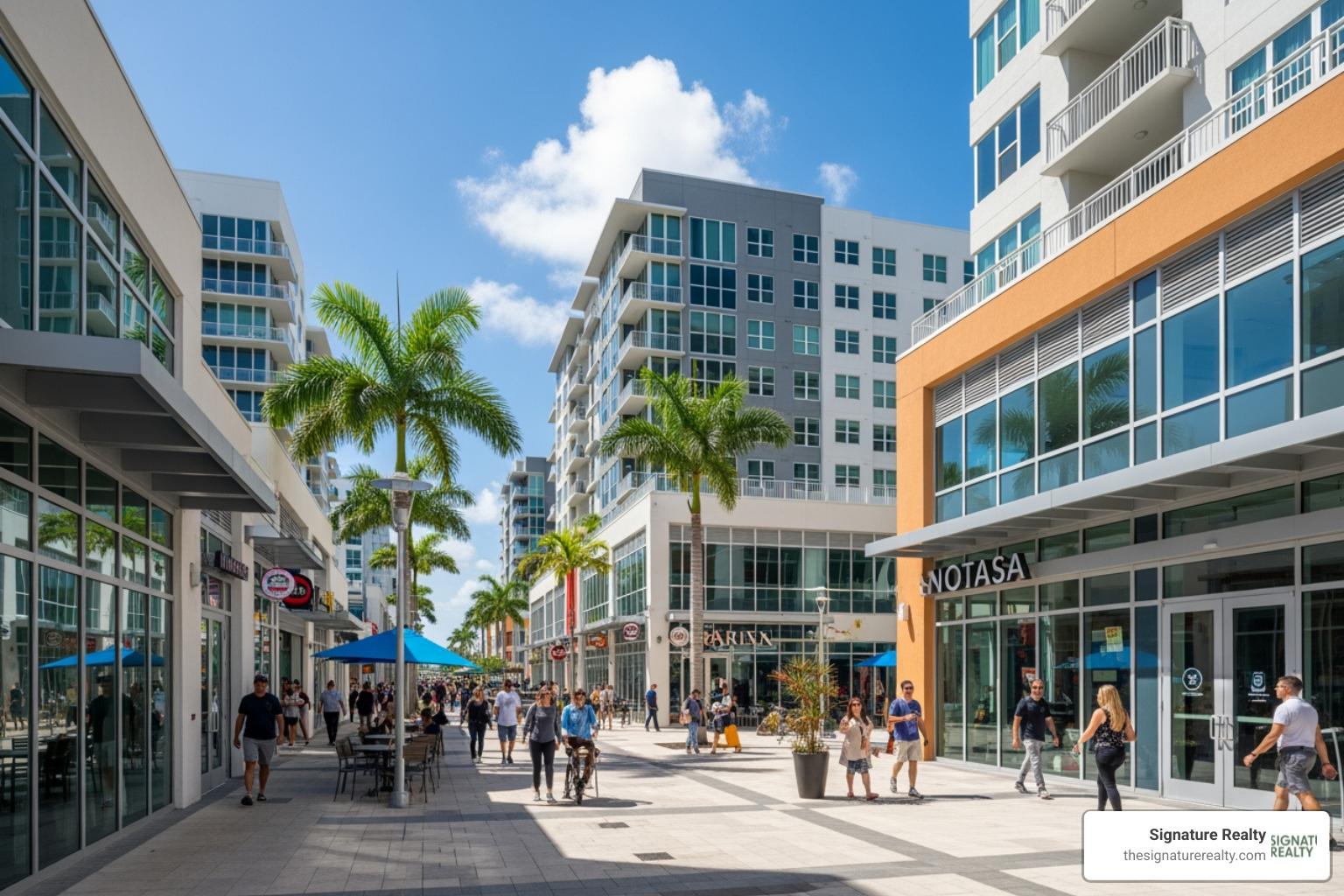
In the South Florida market, we’ve seen a massive shift away from the “commuter culture” toward vibrant, pedestrian-oriented hubs. Whether it’s the bustling streets of Miami or the master-planned communities in Doral, zoning for mixed use is the engine driving this change.
Unlike traditional single-use zoning, which was born out of a desire to separate noisy industrial plants from quiet homes, modern mixed-use zoning recognizes that a coffee shop or a boutique office is actually a benefit to a residential block. This approach supports scientific research on the taxonomy of urban mixed land use planning, which highlights how integrating functions creates more resilient urban environments.
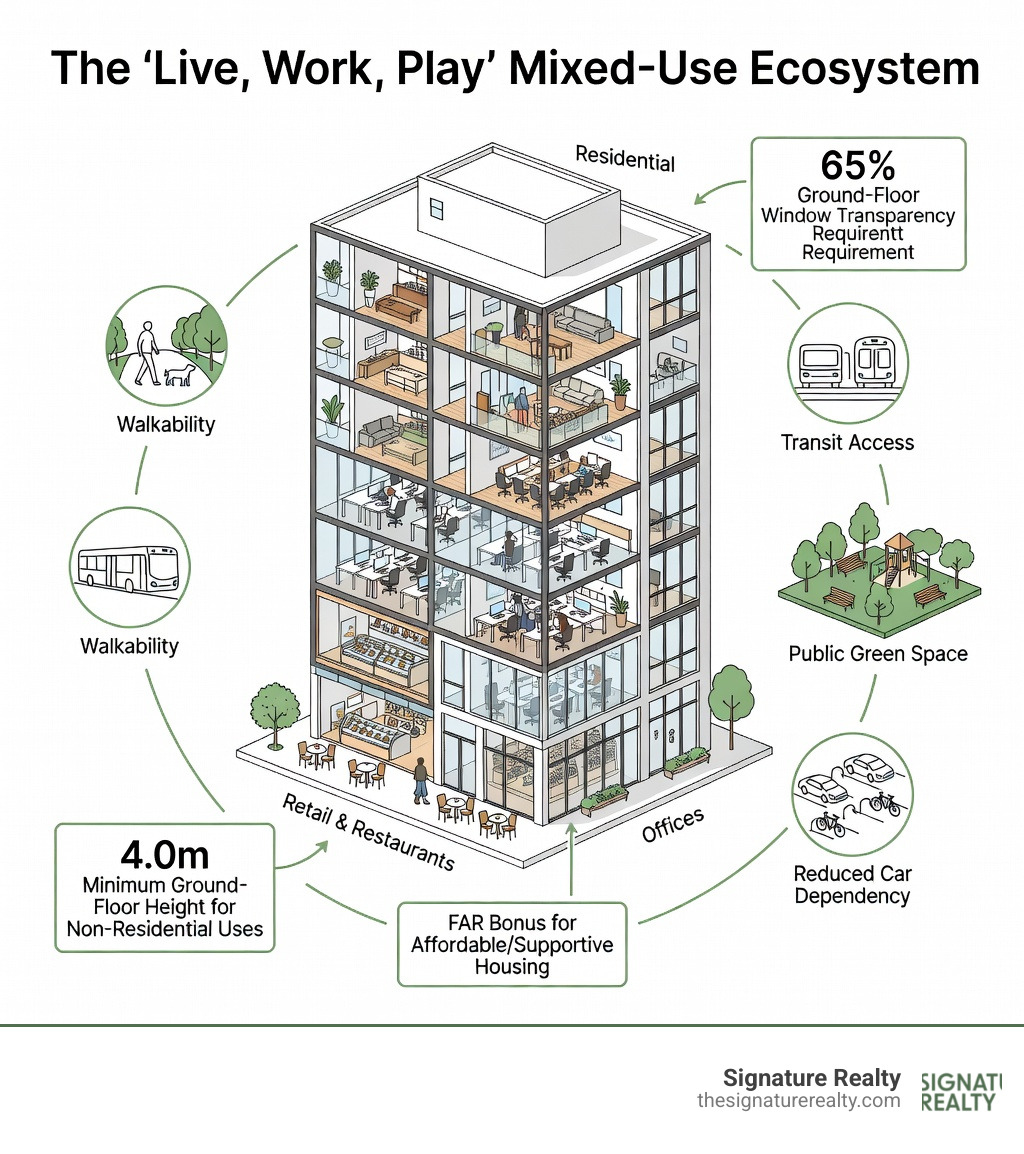
In Miami-Dade County, this is often managed through “Urban Center Districts.” These are special zones designed to create high-density, transit-oriented hubs. By allowing a mix of permitted uses—ranging from retail sales and services to professional offices and multi-unit housing—these zones foster economic vitality and significantly reduce urban sprawl by letting people live closer to where they work and shop.
Understanding Site Regulations and Zoning for Mixed Use
When we help tenants look for space in Hialeah or Medley, the “fine print” of site regulations becomes the most important part of the deal. Each municipality has its own flavor of mixed-use rules.
- Height Limits and Setbacks: In high-growth areas like Hialeah, the city uses mixed-use zoning to transition from older industrial uses to modern residential-commercial blends. You might see height limits of 16.0 meters in neighborhood-scale zones, while core urban zones allow for much taller towers.
- Floor Area Ratio (FAR): This is a critical math problem for every developer. FAR regulates the intensity of a site. For example, a base FAR might be 1.0 to 1, but through various incentives, it can climb as high as 4.0 to 1 or more in dense urban centers.
- Medley’s Industrial Mix: Medley offers a unique challenge. Known for its industrial backbone, the city is increasingly looking at how to integrate commercial services to support its massive workforce.
| Regulation | Mixed Use Neighborhood (MUN) | Mixed Use (MU) |
|---|---|---|
| Typical Height Limit | 16.0 Meters | 25.0+ Meters |
| Base Floor Area Ratio (FAR) | 1.0 | 2.0 |
| Max Floor Area Ratio (with bonuses) | 1.5 | 4.0+ |
| Primary Focus | Neighborhood Scale | Urban Core / Transit Hubs |
Research into the efficacy of mixed-use development shows that these regulations aren’t just red tape—they are the guardrails that ensure a development actually functions for the community.
Design Standards and Pedestrian-Oriented Zoning for Mixed Use
One of the coolest things about zoning for mixed use is that it doesn’t just tell you what you can build; it tells you how it should look to make the neighborhood feel alive.
We often point our clients to the “65% transparency rule.” In many mixed-use zones, ground-floor non-residential facades facing a street must have a minimum of 65% windows between 1.0m and 2.0m above the ground. Why? Because blank walls are boring and make pedestrians feel unsafe. Windows create “eyes on the street” and invite people into shops.
Other design standards include:
- Facade Articulation: Avoiding long, flat walls by using different materials or architectural “recesses” to minimize the perception of mass.
- Weather Protection: Requirements for awnings or canopies at main entrances to keep shoppers dry during those sudden Miami downpours.
- Entrance Orientation: Main entrances must usually face the street or a public plaza, not a rear parking lot, to keep the sidewalk active.
For a deeper dive into these specifics, you can check out more info about mixed-use commercial zoning in Miami.
Parking, Access, and Adaptable Infrastructure
Parking is usually the biggest headache in South Florida real estate. However, zoning for mixed use offers some clever solutions. Many districts allow for “shared parking,” where a doctor’s office uses spaces during the day and a restaurant uses them at night.
We also see a push for Transit-Oriented Development (TOD), which reduces parking minimums for buildings located near major transit hubs. This is a game-changer for affordability, as building a single parking spot in a garage can cost tens of thousands of dollars.
A forward-thinking regulation we love is the “adaptable parkade” requirement. New buildings may be required to have ground-floor heights of at least 4.0m and level floors in garages so that, in the future, those parking levels can be converted into offices or apartments if car ownership continues to drop.
At Signature Realty, we use our proprietary AI deal analyzer to look at these parking and infrastructure requirements for every site, ensuring our clients don’t get stuck with a lease that has hidden operational costs. You can find more info about Signature Realty services to see how we streamline this process.
The Economic Impact and Future of Mixed-Use Communities
Mixed-use zoning isn’t just a trend; it’s a survival strategy for modern cities. As the “retail apocalypse” continues to shutter traditional malls, mixed-use developments provide a lifeline by creating built-in customer bases (the residents living upstairs).
By fostering “18-hour communities”—places where there is activity from 6 AM to midnight—cities like Miami, Doral, Hialeah, and Medley, FL are seeing significant property value increases. These areas attract high-quality tenants and investment because they offer a “sense of place” that a standalone strip mall simply can’t match.
Overcoming Challenges in Mixed-Use Development
It’s not all sunshine and rainbows, though. Mixing uses creates “friction.” A resident living above a bar might complain about noise, or a boutique might struggle with the smells from a neighboring restaurant.
Zoning codes attempt to fix this through:
- Noise Mitigation: Requirements for advanced soundproofing between commercial and residential floors.
- Floor Area Caps: Limits on how much space a single “large-format” tenant (like a big-box store) can take up, ensuring the neighborhood stays diverse.
- Grandfathering: Allowing existing businesses to stay even when zoning changes around them, though this can sometimes limit new redevelopment.
The history of European mixed-use zoning shows that many of these “conflicts” are managed by default in older cities, but in North America, we have to be much more intentional with our regulations to make it work.
Leveraging Incentives for Inclusive and Sustainable Growth
To encourage developers to build what the community needs, many South Florida zones offer “bonuses.” If a developer includes affordable housing or supportive housing units, the city might grant them an FAR increase, allowing them to build a larger, more profitable building.
Preserving our local history is another big one. In many jurisdictions across Miami-Dade, maintaining a building listed on a local historic register can unlock significant development bonuses for the rest of the site.
We also see incentives for:
- Inclusive Design: Bonuses for units that exceed basic accessibility requirements.
- Urban Agriculture: Allowing rooftop gardens or small-scale food production.
- Microclimatic Comfort: Requirements for “sun shadow” studies to ensure new tall buildings don’t plunge public parks into permanent darkness.
Conclusion: Partnering with Signature Realty for Miami Success
Navigating zoning for mixed use in Miami, Doral, Hialeah, and Medley requires more than just a map; it requires a strategy. At Signature Realty, we’ve spent over 13 years mastering the nuances of the South Florida market.
Our tenant representation services are built on data-driven insights that have saved our clients over $2 million in lease negotiations. Whether you are looking for a retail storefront in a new Urban Center District or a flex space in Medley, our AI deal analyzer ensures you are making a move that maximizes your potential.
The “Secret Sauce” of modern cities is the ability to adapt. Mixed-use zoning provides the flexibility for our communities to grow, stay walkable, and remain economically vibrant. Ready to find your place in the mix? Check out our Signature Realty Mixed-Use Zoning Guide and let’s get to work.