
Why Understanding Commercial Lease Negotiability is Your Key to Smarter Business Decisions
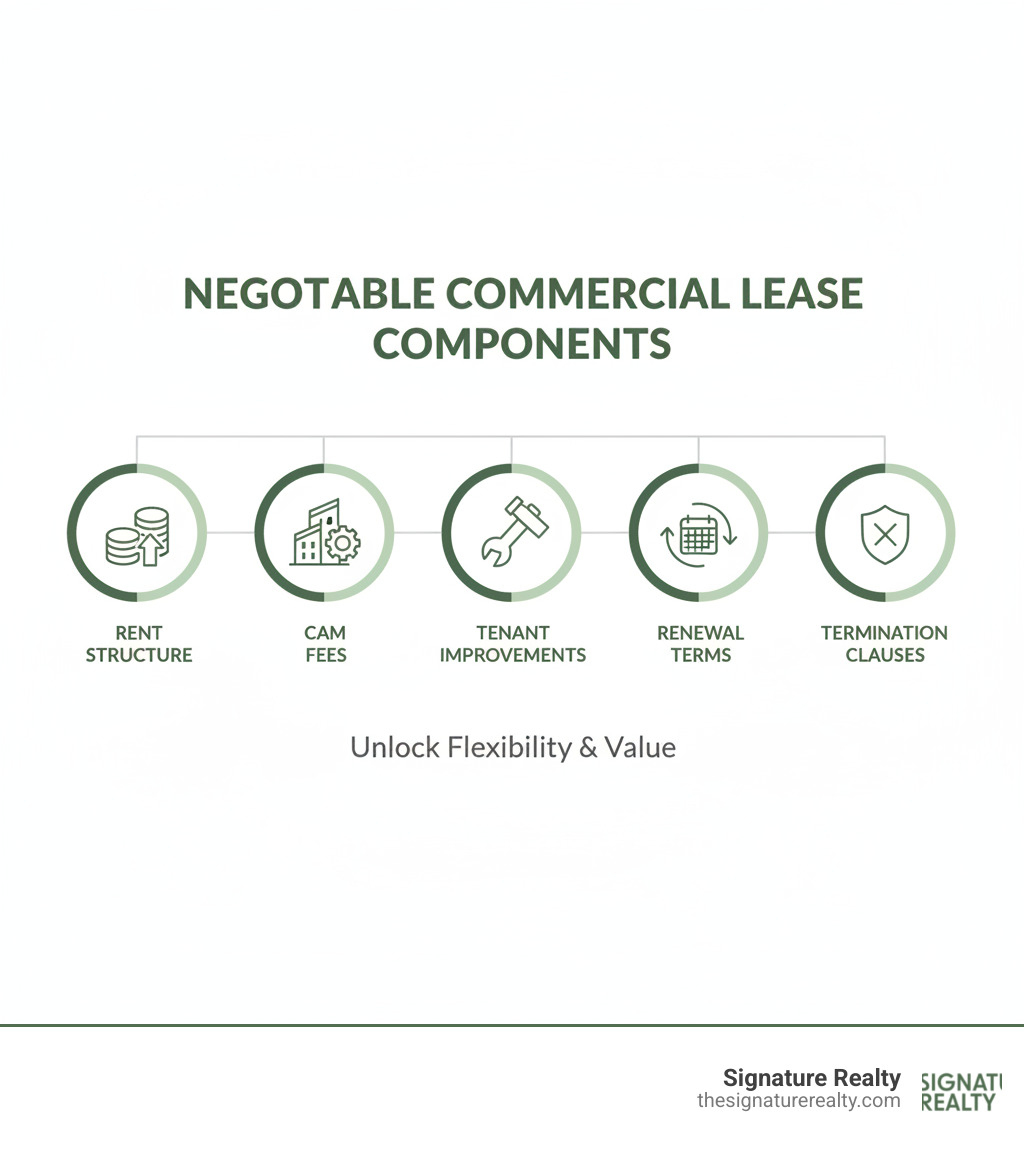
Are commercial leases negotiable? Yes—and far beyond rent. Because commercial leases are governed by contract law, you can negotiate nearly every term: lease length, renewal options, operating expenses, tenant improvements, and more.
This flexibility matters in South Florida markets like Miami, Doral, Hialeah, and Medley, where vacancy, demand, and timing shift leverage. Too many tenants sign a standard lease without scrutiny, exposing themselves to hidden costs and restrictive clauses.
I’m Brett Sherman. My team at Signature Realty uses AI-driven market data and 13+ years of local experience to turn landlord-favored documents into balanced agreements that support growth.
Relevant articles related to are commercial leases negotiable:
- commercial lease agreement florida
- how long does it take to negotiate a commercial lease
- how to negotiate free rent for a commercial lease
So, Are Commercial Leases Negotiable? Your Guide to Key Bargaining Points
Absolutely. Every provision is up for discussion, but your leverage depends on market conditions, the asset’s vacancy history, and your preparation.
For most Miami-Dade businesses, occupancy costs are second only to payroll. In fast-moving submarkets—from Downtown Miami to Medley industrial—landlords with vacancies are far more flexible on rent, TI allowance, and concessions.
Do your homework and get expert help. Understanding true market pricing in Doral vs. Hialeah, and the full cost beyond base rent, turns a standard lease into a strategic advantage.
1. Are Commercial Leases Negotiable?
Yes, absolutely. This is the single most important thing to understand. Commercial leases are not fixed documents; nearly every clause is open to negotiation. Whether you’re looking at a warehouse in Medley, an office in Doral, or a retail space in Hialeah, landlords often present a standard agreement that favors them, but this is just a starting point. Unlike residential leases, commercial agreements are based on contract law, giving you the power to counter with terms that better suit your business needs until a mutually beneficial agreement is reached.
2. What Are the Key Components of a Commercial Lease Agreement?
Know the parts of the lease before you negotiate:
- Parties Involved: Use your entity (LLC/Corp) as tenant to protect personal assets.
- Description of Premises: Confirm exact square footage and clarify usable vs. rentable, common areas, and parking—critical in Doral offices and Medley warehouses.
- Lease Term: Start/end dates should align with your growth plan; consider options for expansion or contraction.
- Rent and Additional Costs: Understand structure (NNN, Gross, Modified Gross) and all pass-throughs (CAM, taxes, insurance).
- Use of Premises: Keep use broad to allow business evolution and complementary services.
- Maintenance and Repairs: Define responsibility for HVAC, plumbing, electrical, and structure.
- Assignment and Subleasing: Ensure consent cannot be unreasonably withheld so you can sell or rightsize.
- Termination and Renewal: Pre-negotiate renewal mechanics and any early termination rights.
3. What Are the Different Types of Commercial Leases?
Lease type dictates total occupancy cost:
- Gross Lease: One bundled rent covering taxes, insurance, and maintenance; predictable but often higher.
- Modified Gross Lease: Landlord covers some expenses; you pay others. Highly negotiable on which costs are included.
- Triple Net (NNN) Lease: Common in Hialeah/Medley industrial. You pay base rent plus property taxes, insurance, and CAM; base rent is lower but expenses fluctuate.
- Percentage Lease: Typical for retail in busy Doral corridors—base rent plus a percentage of gross sales.
Always compare the total estimated monthly cost, not just base rent. We model scenarios for every option.
4. What Are the Typical Costs Associated with a Commercial Lease Beyond Base Rent?
Additional rent can materially change your budget—and is negotiable.
- Common Area Maintenance (CAM) Fees: Cover lobbies, parking, landscaping, security. In Miami-Dade, push for clear definitions and caps on controllable items.
- Property Taxes and Insurance: In net leases, you pay a share. Negotiate base-year protection and caps where possible.
- Utilities: Clarify inclusions, sub-metering, and HVAC costs—significant in South Florida’s climate.
Secure operating expense caps on controllable costs and exclude capital expenditures like roofs or structural replacements.
5. What Are Tenant Inducements and How Can They Be Negotiated?
In competitive Miami-Dade submarkets, inducements can save tens of thousands:
- Free Rent Periods: Valuable during build-out and ramp-up; more likely when space has been vacant.
- Tenant Improvement (TI) Allowance: Landlord-funded dollars to customize your space. Doral offices and Hialeah/Medley industrial deals often include a per-square-foot allowance.
These are standard negotiating levers for creditworthy tenants—ask for them, and align amounts with your build-out scope.
6. What Are Leasehold Improvements and How Are They Handled in Negotiations?
Leasehold improvements include build-outs like offices, demising walls, and specialty power or racking in Medley warehouses. Negotiate:
- Who Pays: Target a TI allowance for core build-out.
- Ownership: Structural items become landlord’s; you remove trade fixtures only.
- Exit Treatment: If the landlord ends the lease early (e.g., redevelopment), seek compensation for the unamortized value of your improvements, especially in high-demand Miami areas.
Securing Your Future: Negotiating Renewal Options and Termination Clauses
A smart lease plans for both stability and flexibility.
- Renewal Options: Keep the right—not obligation—to extend. Pre-set how rent is determined (fixed bump or CPI) rather than vague “fair market value.”
- Termination Rights: Not standard, but negotiable. Define conditions, notice (6–12 months), and fees. In Miami redevelopment zones, address demolition with notice and improvement compensation.

For more detailed strategies on extending your lease on favorable terms, check out our guide on Negotiating a Commercial Lease Renewal.
8. Why Is It Important to Involve a Lawyer in Commercial Lease Negotiations?
Even with a strong broker, have a commercial real estate lawyer review the lease. Florida commercial leases rely on contract law with few default tenant protections, a critical fact for businesses in Miami, Doral, Hialeah, and Medley.
A lawyer will:
- Interpret Complex Language: Clarify obligations and risk.
- Spot Hidden Costs/Risk: CAM, maintenance, liability, default remedies.
- Paper Every Deal Point: Ensure all concessions appear in the final lease.
As legal experts note, “Involving a leasing lawyer…will greatly reduce unreasonable costs and limit unnecessary risk.” We coordinate closely with counsel for full protection.
9. What Due Diligence Should a Tenant Perform Before Signing a Commercial Lease?
Do these checks before you commit:
- Assess Needs: Size, layout, power, loading, parking—today and 3–5 years out.
- Validate Market Rates: Compare true occupancy costs across Miami, Doral, Hialeah, and Medley. Our AI analyzer benchmarks comps and concessions.
- Inspect Systems: HVAC, roof, electrical, fire/life safety—hire pros.
- Verify Zoning: Confirm permitted uses with Miami-Dade County zoning before lease execution. See Miami-Dade zoning resources: https://www.miamidade.gov/global/government/zoning/home.page
- Vet the Landlord: Speak with current tenants about responsiveness and maintenance.
Proper diligence strengthens your negotiating position.
10. What Are Common Pitfalls to Avoid When Negotiating a Commercial Lease?
Avoid these costly mistakes:
- Skipping the Fine Print: A single clause can create major liability.
- Ignoring Total Cost: NNN in Doral can exceed a higher gross rent once CAM/taxes/insurance are added.
- Relying on Verbal Promises: If it is not in writing, it does not exist.
- Accepting a Broad Personal Guarantee: Negotiate limits, burn-offs, or alternatives.
- No Exit Plan: Weak assignment/subletting blocks a sale or rightsize.
Use our Commercial Lease Negotiation Complete Checklist before you sign.
11. How Can a Tenant’s Negotiation Power Be Affected by Market Conditions or Landlord’s Needs?
Leverage moves with supply, demand, and the owner’s situation:
- Tenant’s Market: Higher vacancy in Medley/Hialeah industrial can mean free rent and larger TI.
- Landlord’s Market: Tight Doral offices give owners more control, but strong tenants can still win terms.
- Owner Pressures: Refinancing, long vacancies, or quarter-end goals can open the door to better concessions.
Signature Realty tracks these dynamics across Miami-Dade to time offers and tailor asks.
12. What Role Does a Real Estate Agent Play in Commercial Lease Negotiations?
At Signature Realty, we represent tenants only—your interests come first.
- Market Knowledge: 13+ years across Miami, Doral, Hialeah, and Medley.
- Access: Off-market options with flexible terms.
- Data-Driven: Our AI deal analyzer pinpoints leverage and compares true occupancy costs.
- Execution: We manage tours, proposals, counteroffers, and timelines so you can focus on your business.
See our Commercial Lease Negotiation Lawyer: Ultimate Guide for how legal counsel complements our work.
13. What Are the Key Considerations for Landlords When Drafting or Negotiating a Commercial Lease?
Knowing the owner’s priorities helps you craft win-win proposals:
- Financial Strength: Demonstrate reliable cash flow and references.
- Risk Mitigation: Expect requirements on insurance, maintenance, and default.
- Property Value: A strong lease and tenant mix lift asset value in Miami/Doral.
- Tenant Mix: Complementary uses reduce conflicts and drive traffic.
- Future Flexibility: Demolition or redevelopment rights may appear in fast-changing areas; negotiate notice and compensation.
Address these concerns while securing cost controls and flexibility for your operation.
14. How Do Post-Pandemic Considerations Impact Commercial Lease Negotiations?
Flexibility is now central to South Florida leases:
- Force Majeure: Push for language enabling rent abatement/deferral during mandated shutdowns or similar events.
- Hybrid Work: Many Miami/Doral office users need smaller footprints—negotiate space plans and rightsizing.
- Adaptability: Strengthen assignment/subletting and seek expansion/contraction rights to match evolving needs.
Modern leases should balance protection with agility.
Gaining the Upper Hand: Your Final Checklist for a Winning Lease Negotiation

You now know the answer to are commercial leases negotiable? is yes. The wins come from preparation, clear goals, and the right team.
Due Diligence and Avoiding Common Pitfalls
- Budget the Full Cost: Include CAM, taxes, insurance, utilities, parking, and build-out.
- Verify Zoning: Confirm your use with Miami-Dade before signing.
- Document Everything: Every promise must appear in the final lease.
- Plan Your Exit: Secure assignment/subletting and, where possible, termination mechanics.
Use our Commercial Lease Negotiation Complete Checklist.
The Professional Advantage in the Miami Market
Tenant representation and legal review are essential in Miami, Doral, Hialeah, and Medley. Signature Realty combines 13+ years of local experience with a proprietary AI deal analyzer to uncover off-market options, model true occupancy costs, and time negotiations—saving clients over $2 million.
Ready to secure a lease that works for you?