
How can I get out of a commercial lease: 4 Secure Steps
Understanding Your Options When You Need to Exit a Commercial Lease Early
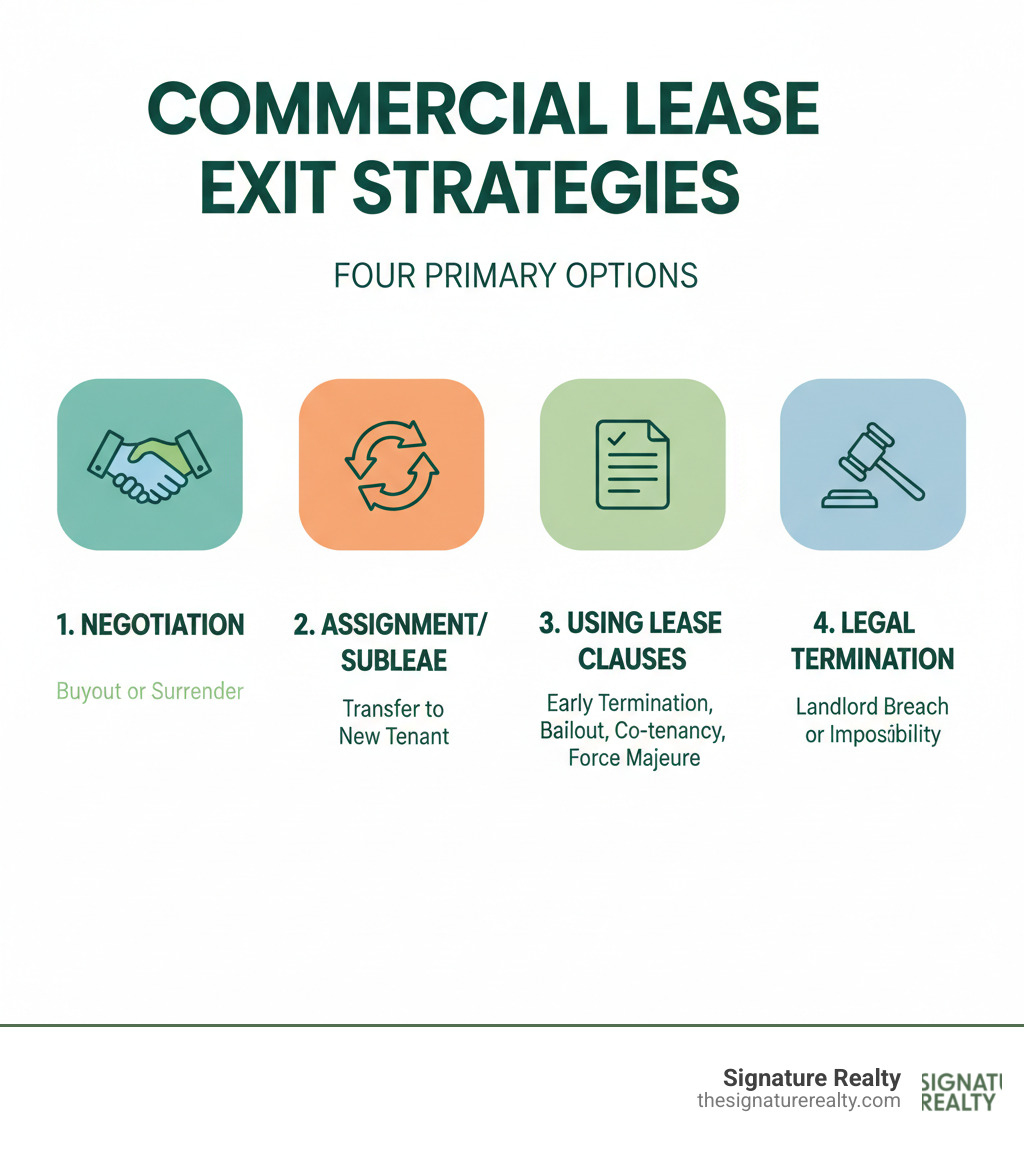
How can I get out of a commercial lease legally and with minimal financial impact? Here are your four primary options:
- Negotiate an early termination – Arrange a buyout or mutual lease surrender directly with your landlord.
- Use built-in lease clauses – Invoke provisions like early termination, bailout, or force majeure if they exist.
- Assign or sublease your space – Transfer your lease obligations to a qualified new tenant.
- Terminate for landlord breach – Legally exit if your landlord fails to meet their contractual duties.
Whether your business has outgrown its Medley warehouse or you’re downsizing your Doral retail space, circumstances in South Florida’s fast-moving market change quickly. Commercial leases are binding contracts, often for three to five years or more. Breaking one without a sound strategy can lead to lawsuits, accelerated rent payments, and damaged credit. But you are not trapped.
I’m Brett Sherman, and for years I’ve helped Miami-area businesses steer complex lease negotiations. I’ve guided dozens of tenants through how can I get out of a commercial lease scenarios, from early terminations to assignment deals that saved clients over $100K in penalties. This guide will walk you through each exit strategy step-by-step, so you can make the smartest decision for your South Florida business.
How can i get out of a commercial lease vocab to learn:
- how to negotiate a commercial lease
- negotiating a commercial lease renewal
- commercial lease negotiation lawyer
How Can I Get Out of a Commercial Lease: A Step-by-Step Guide for Miami Businesses
Breaking free from a commercial lease in Miami, Doral, or Hialeah requires a smart strategy to protect your business. Whether you’re growing or downsizing, you need a clear roadmap for your exit.
Step 1: Analyze Your Lease for Built-in Exit Ramps
Before calling your landlord, grab your lease agreement. The answer to how can I get out of a commercial lease might already be in the document you signed.

Look for these key clauses:
- Early Termination Clause: This provision lets you end the lease before its expiration date, typically by providing 60-90 days’ notice and paying a penalty fee (e.g., three months’ rent). While it stings to pay, it’s often far cheaper than being sued for the full remaining rent.
- Bailout Clause: Common in retail, this protects you if your sales fall below a certain threshold. If your Doral boutique’s foot traffic dries up, this clause could be your way out.
- Co-Tenancy Clause: This allows you to reduce rent or terminate if a major anchor tenant in your retail center closes or if overall occupancy drops significantly.
- Force Majeure Clause: This covers unforeseeable events like hurricanes, pandemics, or government actions that make it impossible to operate. Courts interpret these narrowly, but they can provide grounds for termination in extreme circumstances.
Pay close attention to any notice periods and penalties. Missing a deadline can turn a manageable exit into a legal nightmare. Negotiating these protective clauses when you first sign a lease is always the best strategy. For more tips, see our guide on avoiding bad lease terms.
Step 2: Negotiating an Exit: How Can I Get Out of a Commercial Lease Amicably?
If your lease lacks an exit clause, your next best option is direct negotiation with your landlord. Many landlords in competitive markets like Miami-Dade prefer a reasonable solution over costly litigation or a vacant property.
A lease buyout is the most straightforward approach. You offer a lump sum to be released from all future obligations. The amount is negotiable but often ranges from three to six months’ rent. For a Hialeah industrial space at $5,000/month with two years left ($120,000 total), a buyout might cost $15,000-$30,000, providing certainty and ending your liability. A surrender agreement is the legal document that formalizes this deal, protecting you from future claims.
The key is early, professional communication. Explain your situation honestly, whether you’re expanding or facing hardship. Come prepared with a proposal, not just problems. To minimize penalties, offer to help find a replacement tenant, forfeit your security deposit, or cover some of the landlord’s re-leasing costs. Landlords respect tenants who approach them with realistic solutions. Learn more in our guide to negotiating a commercial lease buyout.
Step 3: Consider Assignment or Subleasing as an Alternative
If a buyout is too costly, transferring your lease obligations is another path for how can I get out of a commercial lease.
- Assignment: You transfer your entire lease—all rights and responsibilities—to a new tenant. Once approved by the landlord, the new tenant deals directly with them. However, your lease may state that you remain secondarily liable if the new tenant defaults.
- Sublease: You remain the primary tenant but rent all or part of your space to a sublessee. They pay you, and you continue to pay the landlord. You are still fully responsible for the lease terms.
Landlord approval is almost always required in Florida. Landlords can deny a replacement for valid business reasons like poor credit or an incompatible business use. Finding and vetting a qualified replacement tenant in Doral or Miami is crucial. You must review their financials and business history to protect yourself, especially if you retain any liability. Our tenant representation services can help you find and vet candidates and negotiate the transfer with your landlord.
Step 4: Identify Legal Grounds for Termination
Sometimes, the answer to how can I get out of a commercial lease lies in your landlord’s failure to uphold their end of the bargain. If your landlord commits a material breach of contract, you may have grounds to terminate without penalty.
- Failure to Repair: If the landlord won’t fix a major issue like a broken HVAC system in the Miami summer, making the space unusable, it could be a material breach.
- Constructive Eviction: This occurs when the landlord’s inaction makes the property uninhabitable, such as ignoring a persistent roof leak that causes mold.
- Quiet Enjoyment: Your lease guarantees your right to operate without constant, unreasonable interference from your landlord.
In rare cases, legal doctrines like frustration of purpose (an unforeseen event makes your reason for leasing impossible) or impossibility of performance (an event makes it objectively impossible for anyone to use the space) may apply. If you believe you have legal grounds, document everything: dates, photos, communications, and costs. Send a formal written notice to your landlord demanding a remedy.
Step 5: Understand the Consequences and Last Resorts
Improperly terminating your lease can have severe consequences. Understanding the risks is a critical part of figuring out how can I get out of a commercial lease.

Your landlord can sue you for all remaining rent (rent acceleration) plus their costs to re-lease the space. A commercial lease lawsuit in Florida can be expensive. A default also damages your business credit, making it difficult to secure future leases or loans. If you personally guaranteed the lease, your personal assets are at risk.
To minimize these risks, communicate proactively. Florida landlords have a duty to mitigate damages, meaning they must make reasonable efforts to re-rent your space, which can reduce your liability. Helping them find a replacement tenant demonstrates good faith.
For businesses in severe financial distress, bankruptcy may allow you to reject a lease, but it’s a last resort with devastating credit consequences. Always consult an experienced commercial real estate attorney. The investment can save you tens of thousands in penalties and litigation costs. At Signature Realty, we work with trusted legal partners to ensure our clients receive comprehensive protection.
Conclusion: Secure Your Exit with Expert Tenant Representation
Your Next Steps for a Successful Lease Exit
Figuring out how can I get out of a commercial lease is a significant business decision, but it’s manageable with the right strategy. We’ve covered your main options: using built-in lease clauses, negotiating a buyout, assigning or subleasing, or terminating due to a landlord breach. Each path has different costs, and the right choice depends on your lease, your landlord, and the current South Florida market.
The best time to plan your exit is before you sign. When negotiating a new lease in Hialeah or Medley, push for flexible terms like early termination clauses or liberal assignment rights. It’s much easier to secure these protections when you’re a desirable new tenant.
At Signature Realty, we’ve spent over 13 years helping South Florida businesses steer these exact challenges. Our data-driven negotiation strategies and proprietary AI deal analyzer have saved our clients over $2 million. We provide fierce advocacy and exclusive access to off-market deals throughout Miami-Dade, whether you’re signing a new lease or planning a strategic exit. The South Florida market moves fast; don’t let an outdated lease hold your business back.
For more insights, check out our guide to negotiating leases for commercial properties. If you’re ready to explore new opportunities, browse our current available lease properties across Miami, Doral, Hialeah, and Medley.
Your business deserves a space that works for you, not against you. Let’s make that happen together.