
Why Lease Renewal Negotiation Can Save Your Business Thousands
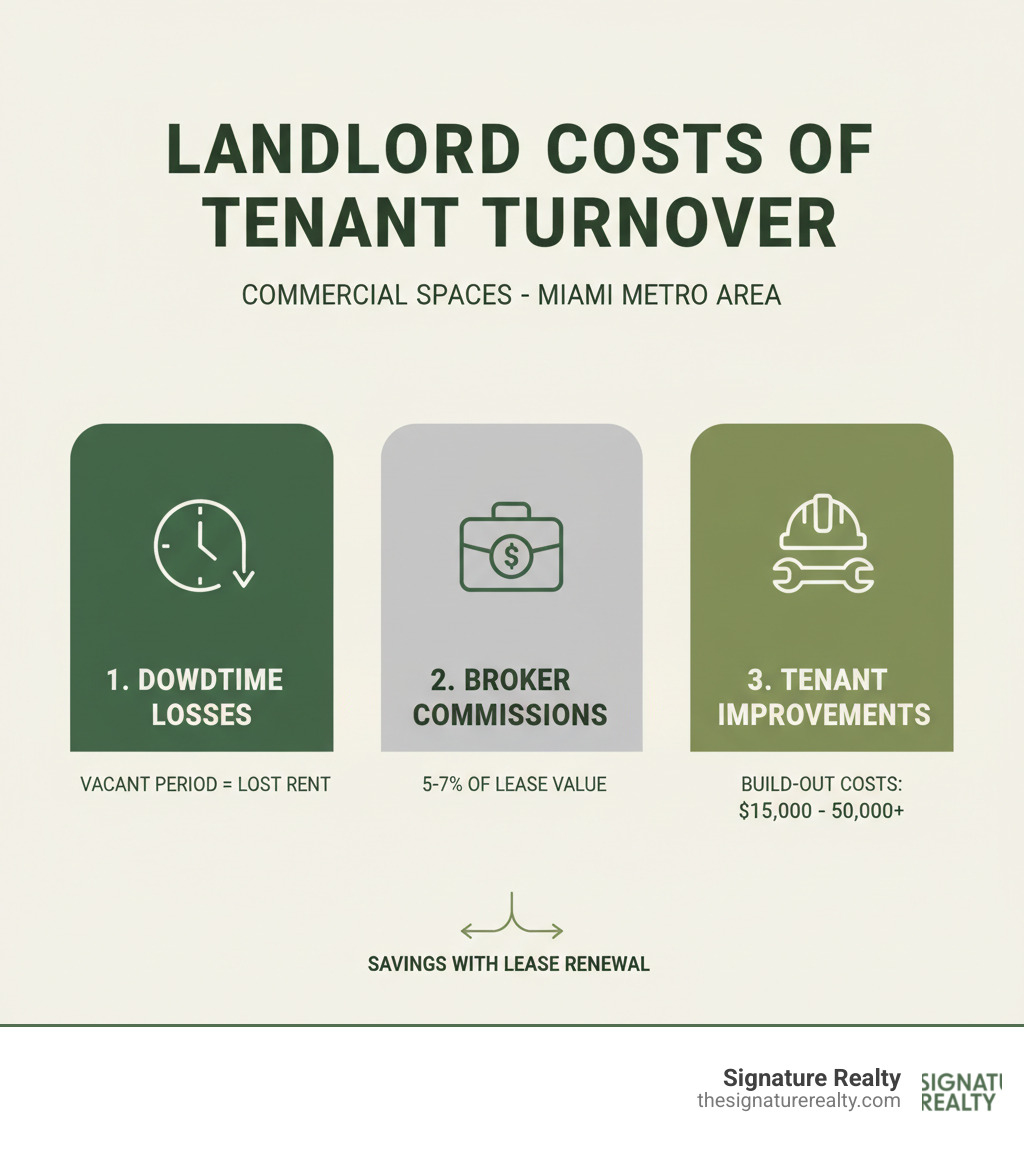
Lease renewal negotiation is a critical opportunity for commercial tenants to secure better terms and reduce costs, yet many treat it as a formality. Most tenants don’t realize that renewal terms are highly negotiable. Landlords can save upwards of $30,000 by retaining an existing tenant versus finding a new one, giving you significant leverage.
In South Florida’s dynamic market—from Doral’s retail corridors to Medley’s industrial hubs—understanding local trends is crucial. A seemingly “standard” rent increase might be above market rates, and you have the power to push back. The risks of not negotiating are severe, including holdover penalties that can reach 150% of your last rent and unfavorable long-term contracts that limit your growth.
To succeed, you must start early (12-18 months out), research market rates, leverage your value as a good tenant, negotiate beyond rent, and document everything in writing. I’m Brett Sherman, and I use AI-driven market analysis to help tenants in Miami, Doral, Hialeah, and Medley secure millions in savings. This guide will show you how to approach your renewal strategically.
Lease renewal negotiation terminology:
- Miami commercial property management
- commercial property for rent in miami florida
- Miami investment properties
Mastering Your Commercial Lease Renewal Negotiation in South Florida

In South Florida, a lease renewal negotiation is a strategic financial opportunity, not a simple administrative task. Whether your business is in a Doral office, a Hialeah warehouse, or a Miami storefront, your approach to renewal defines your financial health for years. The landlord’s renewal notice is an opening offer, not a final decree. Our Commercial Lease Negotiation Guide 2025 details our full methodology, but the core principle is using data to gain leverage.
Step 1: Prepare with Data-Driven Market Research
Strong negotiations begin with homework. Start this process 12 to 18 months before your lease expires to avoid desperation and maintain control. This timeline gives you room to gather data, explore alternatives, and negotiate without pressure.
- Know the Market: Understand your specific submarket. Trends in downtown Miami differ from Doral’s corporate parks or Medley’s industrial corridors. Our Florida Real Estate Market Analysis can help. High vacancy rates in areas like Hialeah mean landlords are more flexible.
- Find Comparable Rents (Comps): Research what similar properties are actually leasing for—not just asking prices. If comparable spaces in Doral are leasing for less than your landlord’s offer, you have a powerful negotiation tool.
- Review Your Current Lease: Scrutinize your existing agreement for critical clauses. Pay close attention to notice periods (missing them can trigger unfavorable automatic renewals), escalation clauses that dictate rent increases, and severe holdover penalties (often 150% of your last rent).
Step 2: Define Your Leverage and Strategy
Your value as a reliable tenant is your greatest asset. Replacing you is expensive for a landlord, involving lost rent, build-out costs ($15,000-$50,000+), and broker commissions (5-7% of lease value). Reminding your landlord of these costs—which can easily exceed $30,000—strengthens your position. As broker Scotty Elyanow notes, landlords want to avoid the cost and hassle of finding a new tenant.
Next, assess your current and future business needs. Are you overpaying for underused space due to hybrid work models? Do you need a different layout or anticipate growth? Your renewal is the chance to align your space with your business reality. Negotiating for expansion rights or a more flexible term can be as valuable as a rent reduction.
Step 3: Key Terms to Negotiate Beyond Rent
While rent is a primary focus, a comprehensive negotiation addresses multiple terms that can save you thousands.
- Tenant Improvement (TI) Allowance: New tenants often get allowances to customize a space. As a renewing tenant, you should ask for one too, especially if your space needs updates. Landlords often prefer offering a TI allowance to a rent reduction as it improves their property’s value.
- Lease Duration and Flexibility: A longer term (5-7 years) gives the landlord stability, which you can leverage for lower rent or other concessions. A shorter term or an early termination clause provides you with flexibility if your business faces uncertainty.
- Expansion Rights (ROFR/ROFO): Secure a Right of First Refusal (ROFR) or Right of First Offer (ROFO) to lease adjacent space as it becomes available, enabling seamless growth.
- Operating Expense (CAM) Caps: In NNN leases, negotiate a cap on annual increases for Common Area Maintenance (CAM), taxes, and insurance to protect yourself from unpredictable costs.
- Personal Guarantee Removal: If your business has a strong financial track record, negotiate to remove or add a “sunset” provision to your personal guarantee, limiting your personal liability.
Step 4: Execute the Negotiation and Finalize the Deal
Present your proposal professionally, supported by your market data. If a landlord is unwilling to negotiate, it’s often a tactic. Remind them of your value, demonstrate that you are exploring alternatives, and be prepared to pivot your requests. For example, if they won’t lower the rent, ask for a larger TI allowance.
If a landlord refuses any changes, you may need to consult a lawyer. Bringing in a tenant representation expert can also change the dynamic by removing emotion and providing objective analysis.
Once you reach an agreement, get everything in writing. Verbal promises are worthless. All terms must be detailed in a lease amendment or new agreement. Before signing, have a commercial real estate attorney review the document to protect your interests. Our Tenant Representation Services are designed to manage this entire process, ensuring your interests are protected from start to finish.
Conclusion: Secure Your Future with an Expert-Led Negotiation

A lease renewal negotiation is a pivotal moment that shapes your business’s financial future. Too many commercial tenants in Miami, Doral, Hialeah, and Medley passively accept terms, leaving tens of thousands of dollars on the table. By starting early, researching the market, and negotiating key terms beyond rent, you can secure a deal that supports your growth.
Don’t steer this complex process alone. At Signature Realty, we bring 13+ years of experience and a track record of over $2 million saved for our clients. Our proprietary AI deal analyzer gives you a data-driven edge, revealing market patterns that create leverage at the negotiating table. We understand the nuances of the South Florida market because we work here every day.
Your lease renewal is an opportunity. With the right strategy, you can lock in favorable rates, secure flexibility, and protect your business from unnecessary costs. Don’t wait until you’re weeks away from expiration. Start planning now to gain the negotiating power you deserve.
Ready to secure the best possible terms for your South Florida commercial space? Contact our Miami real estate experts today and let us build a lease that supports your vision.