
Renegotiate Commercial Lease: Secure 2025 Savings
Why Renegotiate Your Miami Commercial Lease is a Smart Move
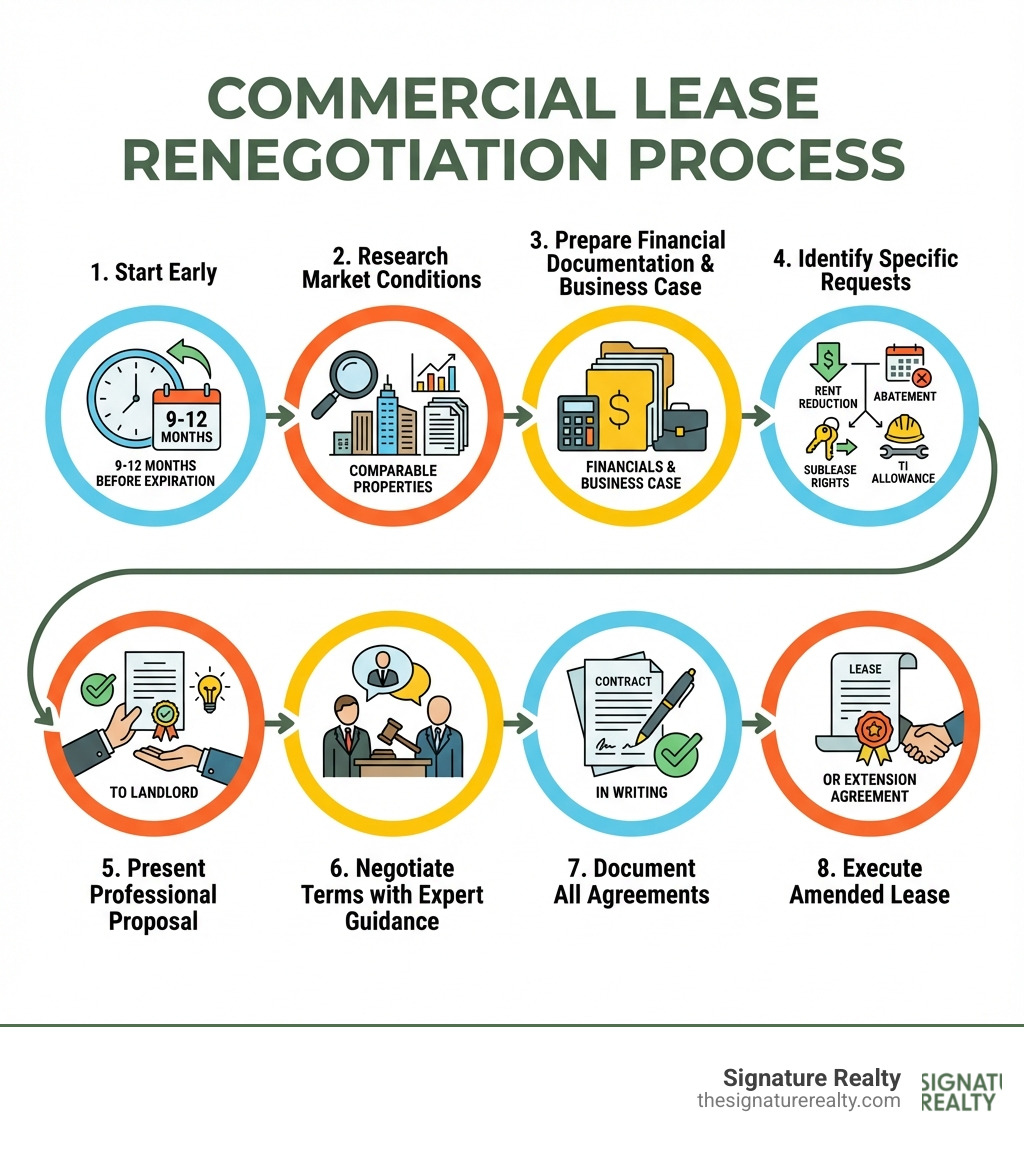
– Start Early: Begin 9–12 months before lease expiration to maximize leverage
- Build Your Case: Gather market data, financial statements, and comparable properties in Miami, Doral, Hialeah, and Medley
- Know Your Options: Rent reduction (permanent or temporary), rent abatement (deferred payments), or subleasing rights
- Present Solutions: Offer longer lease terms, revenue sharing, or other concessions in exchange for lower rent
- Get Expert Help: Hire a tenant representative or commercial lease attorney to strengthen your position
- Have Backup Plans: Identify alternative locations in D-oral, Hialeah, or Medley if negotiations stall
Real estate costs are often the second–largest business expense after payroll for most companies, a fact underscored by resources from organizations like the U.S. Small Business Administration. In South Florida’s dynamic market—from Doral’s industrial corridors to Hialeah’s retail fronts—lease terms that made sense two years ago may no longer reflect today’s vacancy rates, tenant incentives, or your business’s current needs.
Landlords want predictable returns and reliable tenants. That’s your leverage. When you approach renegotiation with solid market data and clear proposals, you create a win-win: you reduce costs or gain flexibility, while your landlord retains a proven tenant and avoids the expense of vacancy, marketing, and tenant improvements for a new occupant.
Many businesses successfully renegotiate by presenting specific solutions—whether it’s a temporary rent reduction during a downturn, caps on operating expenses in a net lease, or permission to sublease unused space as your operations evolve. The key is preparation, timing, and understanding what both sides need.
I’m Brett Sherman, and I’ve helped South Florida businesses renegotiate commercial lease terms that have saved clients over $2 million through AI-driven market analysis and strategic tenant representation. My experience negotiating renewals, avoiding hidden escalation clauses, and leveraging vacancy data in Miami, Doral, Hialeah, and Medley gives you the edge to secure better terms without the guesswork.
Simple guide to renegotiate commercial lease:
- commercial lease terms
- commercial lease negotiation checklist
- how long does it take to negotiate a commercial lease
The Strategic Guide to Renegotiate Your Commercial Lease in South Florida

Successfully renegotiating your commercial lease in competitive markets like Miami, Doral, Hialeah, or Medley requires a strategic approach. It’s about understanding the market, preparing your case, and knowing your leverage. When executed well, it can lead to significant benefits for both tenants and landlords, fostering long-term relationships and adapting agreements to current realities.
Key Triggers: When and Why to Start Renegotiations
The decision to renegotiate commercial lease terms isn’t always about distress; often, it’s a proactive business strategy. Several primary reasons might prompt a business to seek new terms for their commercial agreement in South Florida:
- Market Shifts: The commercial real estate landscape in South Florida is constantly evolving. If market rental rates for comparable properties in areas like Miami-Dade have decreased, or if vacancy rates have climbed (as they have considerably since early 2020), you might be paying above market value. Renegotiating can align your lease with current conditions. More info about the Miami Commercial Real Estate Market.
- Financial Hardship: Unexpected downturns, like the economic pressures faced by many businesses since 2020, can make existing rent unsustainable. Renegotiating can alleviate financial stress and help ensure business continuity.
- Business Growth or Downsizing: If your business in Doral is expanding rapidly and needs more space, or if remote work means you need less square footage in your Hialeah office, your current lease might no longer fit. Renegotiation could involve expanding, contracting, or even exploring subleasing options.
- Lease Expiration: As your lease approaches its end, it’s a natural and optimal time to initiate renegotiations. This provides a window to reassess your needs and leverage your long-standing tenancy.
- Landlord Non-Compliance: If your landlord isn’t upholding their end of the agreement, such as failing to make necessary repairs or provide agreed-upon services, you may have grounds to renegotiate terms or seek rent abatement.
- Optimal Timing: When should you initiate these crucial conversations? We recommend starting the process early, ideally 9 to 12 months before your current lease expires. This ample lead time allows for thorough research, strategizing, and multiple rounds of negotiation. Waiting until the last minute severely limits your options and leverage, potentially forcing you into a less favorable agreement or a costly, rushed relocation.
Building Your Case: How to Prepare to Renegotiate a Commercial Lease
Preparation is paramount when you decide to renegotiate commercial lease terms. The stronger your case, the more leverage you’ll have. Here’s how to strengthen your position:
- Understand Your Leverage: Landlords prioritize retaining good tenants. If you have a history of timely payments, maintaining the property well, and contributing positively to the building’s ecosystem, you’re a valuable asset. Landlords face significant costs with tenant turnover—including lost rent, marketing expenses, and tenant improvement allowances—making them more inclined to work with you. High vacancy rates in areas like Miami-Dade also give tenants more leverage.
- Conduct Thorough Market Research: Knowledge is power. Before approaching your landlord, research current market rental rates for comparable properties in your specific area (e.g., Medley industrial properties, Hialeah retail spaces). Look at recent lease deals, available inventory, and local economic trends. This data will be your strongest argument for desired changes. Our proprietary AI deal analyzer provides data-driven strategies that give our clients an unparalleled edge in this research. Real Estate Market Analysis Miami.
- Gather Supporting Documentation: Presenting a professional and data-backed proposal is crucial. Include:
- Financial Statements: If you’re seeking rent relief due to financial hardship, be transparent (within reason) about your business’s performance.
- Business Plan: Demonstrate your long-term commitment and viability.
- Comparable Lease Data: Show what similar spaces are leasing for in your area.
- Your Current Lease: Understand every clause, especially those related to renewals, operating expenses, and termination.
- Have a Backup Plan: What if negotiations don’t go your way? Having a “Plan B” is crucial. This could involve researching alternative locations in Doral or exploring options for a commercial lease buyout. This not only provides a safety net but also strengthens your negotiating stance, as you’re prepared to walk away if necessary.
The Negotiator’s Playbook: Key Terms and Winning Strategies
When you set out to renegotiate commercial lease terms, it’s not just about the rent. Many clauses are open for discussion, and understanding them is key to a successful outcome.
- Rent (Base and Additional):
- Base Rent: This is the most obvious term to renegotiate. You might seek a temporary reduction during a tough period or a permanent decrease if market rates have dropped.
- Additional Rent / Operating Expenses: For net leases (single, double, or Triple Net Lease Properties), tenants pay a share of the landlord’s operating expenses (property taxes, insurance, maintenance, CAM). Negotiate caps on these increases or audit rights to ensure accuracy.
- Tenant Improvement (TI) Allowance: If your space needs updates or renovations to better suit your business, you can negotiate for the landlord to contribute towards these costs. This is particularly relevant if the landlord wants to retain you and avoid the expense of preparing the space for a new tenant.
- Lease Term and Renewal Options: You might offer to extend your lease term in exchange for a lower monthly rent. Conversely, if you need more flexibility, you could negotiate for a shorter term with more favorable renewal options, including the right of first refusal for expansion space.
- Subleasing Rights: Gaining the right to sublease part or all of your space can be invaluable if your business needs change, offering flexibility and potential revenue generation. Landlords often prefer a tenant who can find a subtenant rather than having a completely vacant space.
- Use Clause: This clause dictates how you can use the leased premises. A broader use clause provides more flexibility for your business to adapt and grow without needing constant landlord approval.
- Competitor Clause: Especially vital for retail businesses in Hialeah or Miami, a competitor clause prevents your landlord from leasing space in the same building or center to a direct competitor.
- Repair and Maintenance Responsibilities: Clearly define who is responsible for what. Negotiate to exclude reasonable wear and tear, structural repairs, and issues arising from landlord negligence from your responsibilities.
- Restoration Obligations: Upon lease termination, tenants are often required to restore the premises to its original condition. Negotiate to limit this to removing only your trade fixtures and chattels, not all leasehold improvements.
We guide our clients through these complex terms, using our data-driven insights to identify what’s negotiable and how to best position your requests. Our 13+ years of experience in the South Florida market mean we know what landlords are willing to concede.
Top 5 Negotiable Lease Clauses:
- Base Rent & Escalations: The most direct impact on your bottom line.
- Operating Expenses (CAM): Caps on increases or audit rights can save thousands.
- Tenant Improvement Allowance: Funding for necessary build-outs or upgrades.
- Lease Term & Renewal Options: Flexibility or stability, depending on your business strategy.
- Subleasing Rights: Critical for adapting to changing space needs.
Understanding Your Options: Rent Reduction, Abatement, and Subleasing
When considering how to renegotiate commercial lease terms, understand the different types of relief available. Each option serves a distinct purpose and carries different implications for both tenant and landlord.
| Option | Description – Rent Reduction: This is a permanent or temporary decrease in your base rent. It’s often negotiated when market rates in areas like Miami, Doral, or Hialeah have dropped significantly, or as a concession for a longer lease term.
- Rent Abatement: This is a temporary suspension of rent payments, usually for a few months. The unpaid rent is often added to the end of the lease term. This is a common solution for tenants facing short-term financial difficulties.
- Subleasing: If you have more space than you need, subleasing a portion of it can generate income to offset your rent. It’s crucial to have this right clearly defined in your lease agreement.
The Role of a Tenant Representative in Lease Negotiations
Navigating the complexities of commercial real estate in South Florida can be challenging. A tenant representative, or tenant rep, is a commercial real estate broker who specializes in representing the interests of tenants. Here’s why having one on your side is a game-changer:
- Market Expertise: A good tenant rep has in-depth knowledge of the local market, including current rental rates, vacancy rates, and landlord concessions in areas like Miami, Doral, and Hialeah.
- Negotiation Skills: They are experienced negotiators who can leverage market data and your position to secure the best possible terms.
- Saves You Time and Money: By handling the research, communication, and negotiation, a tenant rep frees you up to focus on your business. Their expertise often leads to significant cost savings that far outweigh their commission (which is typically paid by the landlord).
At Cardinal Commercial Real Estate, we specialize in representing tenants in Miami, Doral, Hialeah, and Medley. Our deep understanding of the South Florida market and our commitment to our clients ensure you get the best possible outcome in your lease renegotiation. Contact us today to learn how we can help you achieve your real estate goals.