
Retail Therapy for Your Portfolio
Understanding Retail Property Management
Retail property management is the specialized oversight of commercial real estate used by retail businesses. This includes everything from bustling shopping centers and strip malls to individual storefronts. It’s a crucial function for owners who want to maximize their investment.
Here’s how retail property management differs from other types of property management:
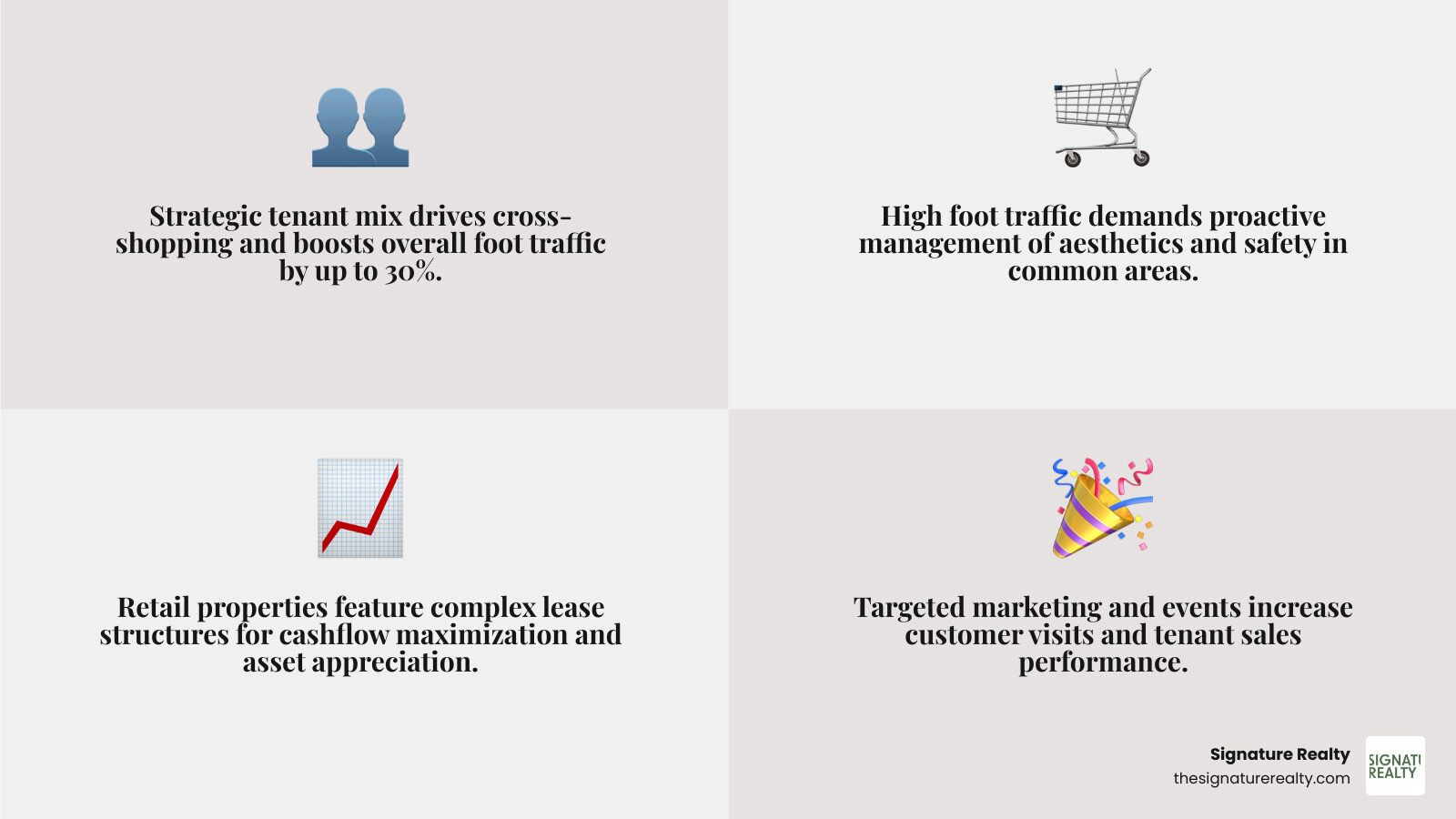
- Tenant Focus: Retail management prioritizes a strategic tenant mix to create a vibrant shopping environment and boost foot traffic.
- Consumer Experience: It heavily focuses on maintaining attractive aesthetics, safety, and common areas to enhance the shopper experience.
- Operational Intensity: Retail properties often have higher foot traffic, more complex lease structures, and require more proactive management than office or industrial spaces.
- Marketing & Events: Managers frequently coordinate marketing, promotions, and events to drive customer visits and tenant sales.
For property owners in dynamic markets like Miami, Doral, Hialeah, and Medley, effective retail property management is the backbone of asset appreciation and steady cash flow. It’s about more than just collecting rent; it’s about crafting spaces where businesses and communities thrive.
As Brett Sherman, an expert in commercial real estate, I’ve seen how effective retail property management transforms assets. My experience leveraging AI for market insights and negotiation has consistently delivered exceptional results for property owners and tenants.
The Mechanics of Modern Retail Property Management

In the high-stakes world of South Florida real estate, managing a retail asset is less about “babysitting” a building and more about “engineering” value. Whether we are looking at a luxury corridor in Miami or a high-traffic retail strip center in Hialeah, the goal remains the same: asset appreciation and cashflow maximization.
In cities like Doral, where commerce moves at the speed of light, property managers act as the “quarterbacks” of the investment. They aren’t just reacting to leaky roofs; they are analyzing market, business, and industry dynamics to ensure the real estate solutions align with the owner’s long-term business objectives. This involves a comprehensive plan that covers everything from the annual budget to the synergistic atmosphere of the tenant roster.
To understand why this sector requires such a specialized touch, look at how it stacks up against other commercial sectors:
| Feature | Retail Management | Office Management | Industrial Management |
|---|---|---|---|
| Primary Driver | Foot Traffic & Sales | Workplace Productivity | Logistics & Efficiency |
| Tenant Mix | High Diversity (Synergy) | Low to Medium | Low (Single or Few) |
| Operational Intensity | Very High | Moderate | Low to Moderate |
| Maintenance Focus | Aesthetics & Common Areas | HVAC & Tech Infrastructure | Dock Logistics & Compliance |
| Fee Structure | Often Higher (Intensity-based) | Standard | Standard |
How Retail Property Management Differs from Other Sectors
When you manage an office building, your “customer” is the employee. When you manage an industrial warehouse in Medley, your “customer” is the logistics manager. But in retail property types, the “customer” is actually the customer’s customer—the shopper.
This creates a unique ripple effect. If the parking lot is poorly lit or the signage is outdated, the shopper doesn’t visit. If the shopper doesn’t visit, the tenant doesn’t make sales. If the tenant doesn’t make sales, the landlord doesn’t get rent. This is why retail property management is obsessed with consumer behavior and foot traffic. Unlike industrial real estate, where a truck arriving at a dock is a purely functional event, a customer walking into a store is an emotional and economic event that must be cultivated through a “synergistic environment.”
Core Responsibilities and Strategic Tenant Mix
One of the most vital aspects of retail landlord representation is the art of the tenant mix. You can’t just fill vacancies with the first business that signs a check. You need a mix that encourages “cross-shopping.”
For example, placing a high-end coffee shop next to a boutique fitness studio in Doral creates a natural flow of traffic. This strategic placement is why top-tier firms often boast a 92% tenant retention rate. When businesses thrive together, they stay together.
The core responsibilities of a manager in this sector include:
- Tenant Matching: Extensively screening and matching tenants to the local demographic.
- Lease Administration: Managing complex “percentage rent” structures and retail lease negotiations.
- Community Engagement: Organizing events or holiday marketing to keep the center relevant to the neighborhood.
- Operational Excellence: Ensuring that common areas, from food courts to restrooms, are pristine.
Why Retail Management Fees and Team Structures Are Unique
You might notice that management fees for shopping centers are often higher than for a warehouse. While a large industrial site might command a 1% fee, a smaller retail center might see fees up to 5% of passing income. Why? Because retail is intense.
According to research on assembling a retail management team, a larger property with multiple anchor tenants and over 100 specialty shops requires a small army. A typical team includes:
- The Property Manager: The strategist overseeing the big picture.
- Financial Manager: Handling complex billing, collections, and tax analysis.
- Lease Administrator: Ensuring every clause in a 50-page lease is followed.
- Maintenance & Stationary Operators: Proactive teams that handle 24/7 emergency responses and preventative care.
The good news for owners? Many of these costs, including staff salaries, are often recoverable through “outgoings” or CAM (Common Area Maintenance) charges, provided the leases are structured correctly.
Leveraging Technology and AI in Retail Property Management
The days of managing properties with a clipboard and a prayer are over. Modern Miami commercial property management relies heavily on data.
As noted by industry experts like Dr. Sanjay Rishi on workplace transformation, technology is reshaping how we interact with physical spaces. In retail, this means using AI to analyze foot traffic patterns or predict when an HVAC unit in a Doral storefront is about to fail.
At Signature Realty, we take this a step further with our proprietary AI deal analyzer. This tool allows us to look at thousands of data points to ensure our clients are getting the best possible terms, saving them over $2 million in lease negotiations to date. Technology also enables:
- Virtual Tours: Allowing national retailers to “walk” a space in Hialeah from their headquarters in New York.
- Automated Rent Collection: Reducing arrears and improving cash flow.
- Real-time Reporting: Giving owners 24/7 access to their asset’s performance via owner portals.
Navigating Challenges Across Strip Malls and Standalone Stores
Managing a massive mall is a different beast than managing a retail strip center in Hialeah. Each format has its own headaches:
- Shopping Centers: The challenge here is “co-tenancy.” If an anchor tenant (like a grocery store) leaves, it can trigger clauses that allow other tenants to pay less rent. Managers must be proactive in “asset stabilization” to prevent a domino effect.
- Strip Malls: Here, the focus is on parking logistics and signage. In high-density areas like Medley or Hialeah, ensuring that customers can actually get in and out of the lot is a daily battle.
- Standalone Stores: These often involve “triple-net” (NNN) leases where the tenant handles most maintenance, but the manager must still ensure the tenant is keeping the property up to code and maintaining the “storefront aesthetics.”
Holiday marketing coordination and signage approvals are also critical. A “one-size-fits-all” approach doesn’t work in South Florida, where hurricane preparedness must be part of the annual operational budget.
Financial Stewardship, Compliance, and Sustainability
A retail property manager is, at heart, a financial steward. This means more than just depositing checks. It involves:
- CAM Reconciliations: Ensuring that the “Common Area Maintenance” charges billed to tenants accurately reflect the actual costs.
- Compliance: Adhering to standards like the Sarbanes-Oxley Act for financial reporting and ensuring all properties meet local building codes and safety regulations.
- Risk Mitigation: Implementing formal processes for emergency response and disaster recovery—essential for professional property management in Miami where tropical storms are a reality.
- Sustainability: Using EnergyStar data to track utility consumption and implementing “value engineering” to reduce operating expenses through energy-efficient lighting or better waste management.
Maximizing Asset Value in the South Florida Market
The ultimate goal of retail property management is to take an asset and make it worth more tomorrow than it is today. This is often achieved through “stabilization”—moving a property from, say, 77% occupancy at acquisition to a healthy 94% occupancy.
For many owners, the best way to achieve this is through outsourcing. By partnering with a specialized firm, you gain access to a national network of retailers and cutting-edge technology without the overhead of an in-house team.
At Signature Realty, we bring 13+ years of experience to the table, specifically focusing on the Miami, Doral, Hialeah, and Medley markets. We don’t just “manage” properties; we use data-driven strategies and our proprietary AI to ensure your portfolio is performing at its peak. Whether you are looking for retail space for rent in Miami or need expert commercial property management in Florida, the right management team is the difference between a struggling storefront and a thriving profit center.
Effective management ensures that “happy tenants stick around,” and in the competitive South Florida landscape, tenant retention is the truest metric of success. By focusing on relationship building, proactive maintenance, and financial transparency, we help owners turn their real estate into a “retail therapy” session for their entire investment portfolio.
If you’re ready to see how professional Miami property management services can elevate your assets, it’s time to look toward the future of the market—one driven by AI, local expertise, and a relentless focus on value.