
Why a Strong Negotiation Letter is Your Key to Miami Commercial Real Estate
A commercial lease negotiation letter sample (Letter of Intent, or LOI) is the fastest way to set the tone and scope of your deal in Miami, Doral, Hialeah, and Medley. It’s non-binding, but it outlines your desired business terms before the landlord drafts a lease, creating leverage and clarity from day one.
Key Components of a Commercial Lease Negotiation Letter:
- Property details – Address, square footage, and specific unit/suite
- Proposed lease term – Duration (3-5 years is typical) and renewal options
- Rent proposal – Base rent amount, escalation terms, and free rent periods
- Tenant improvements – Who pays for renovations and build-out allowances
- Permitted use – Clear description of how you’ll use the space
- Additional terms – CAM charges, parking, signage rights, subletting options
Without a clear LOI, you risk overpaying and accepting vague terms on CAM charges, escalations, and improvements that can hurt profitability. A concise, data-backed LOI helps you avoid these pitfalls.
I’m Brett Sherman. Using AI-driven market insights, I’ve helped South Florida tenants shift negotiations in their favor and save six figures over a lease term.
Easy commercial lease negotiation letter sample glossary:
- how to negotiate a commercial lease
- commercial lease negotiation tips
- how to negotiate free rent for a commercial lease
The Importance of Market Research Before You Write
Strong LOIs are powered by local data. Before drafting your commercial lease negotiation letter sample, research:
- Comparable Rents (Comps): Show how your proposal aligns with similar space in Miami, Doral, Hialeah, or Medley. This supports lower base rent or capped escalations.
- Vacancy Rates: High vacancies (e.g., certain retail pockets in Hialeah) increase your leverage for concessions like free rent.
- Landlord Incentives: In South Florida, 2–3 months of free rent or TI allowances are common incentives—know when to ask.
This prep signals you’re serious and informed. For more insights, explore our Miami real estate market analysis.
Your Free Commercial Lease Negotiation Letter Sample & Guide
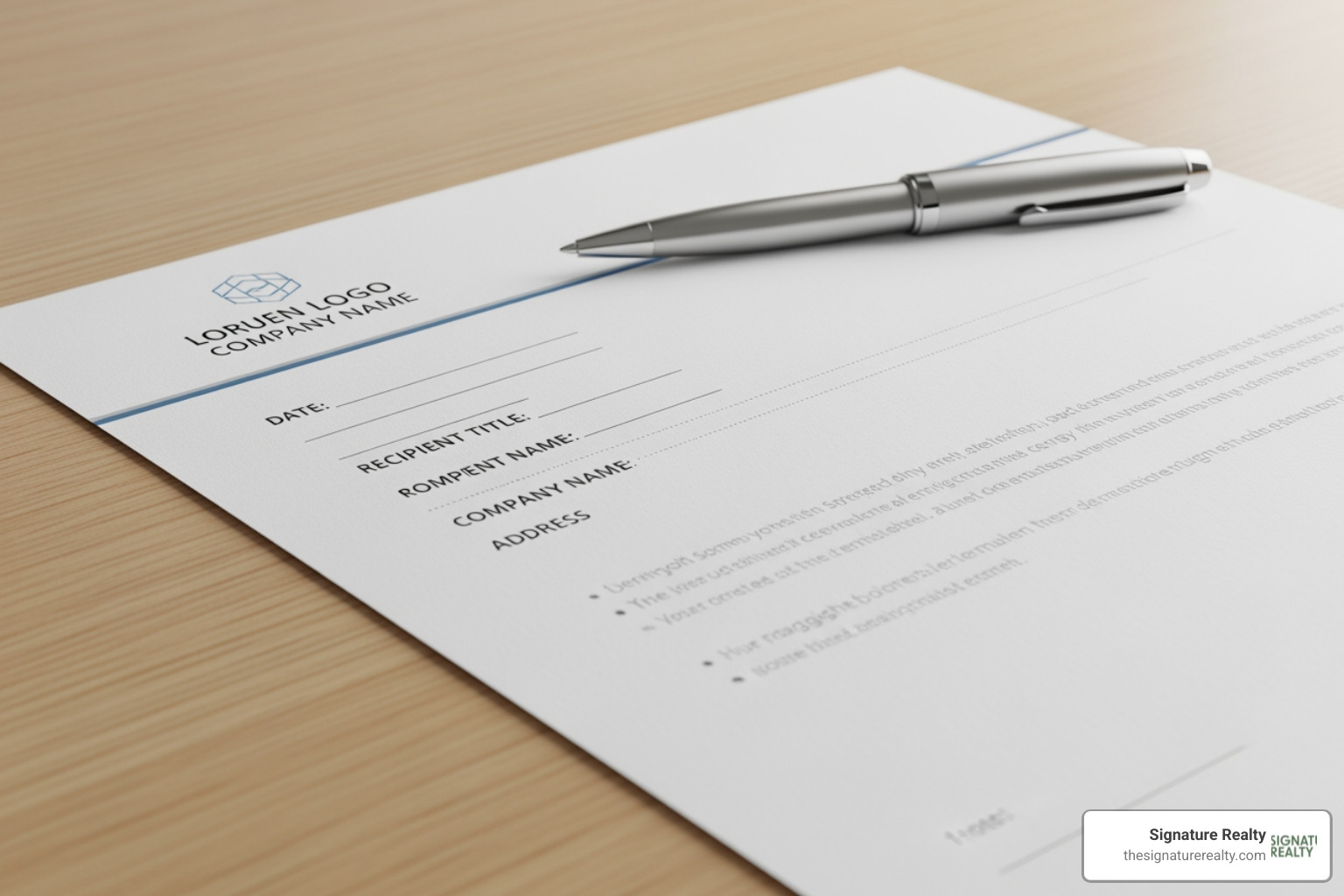
You’ve done the research. Now convert it into a clean, persuasive LOI custom to South Florida norms. A tight LOI keeps everyone aligned and speeds up negotiation.
Your Free Commercial Lease Negotiation Letter (LOI) Template
Use a professional framework, then customize for the property and your business in Miami, Doral, Hialeah, or Medley. Include parties, premises, term, rent, use, improvements, and special conditions. To get started, use an editable Letter of Intent template and adapt it to your deal.
Key Components of a Commercial Lease Negotiation Letter Sample
Every clause is an opportunity to protect your interests:
- Lease Term & Renewals: Most deals run 3–5 years; align term length with growth plans, then add renewal options to keep flexibility.
- Rent & Escalations: Use comps to justify base rent and request CPI-tied or capped escalations instead of automatic percentage bumps.
- Tenant Improvement (TI) Allowance: Specify build-out needs and ask for market-appropriate TI (often $30–$100+ per SF for heavy build-outs).
- Permitted Use & Exclusivity: Define operations precisely; retail tenants often need exclusivity to block direct competitors in the same center.
- Exit Strategies: Secure subletting/assignment rights and, if possible, an early termination option tied to specified conditions.
Use our complete checklist for your negotiation to ensure nothing gets missed.
How to Propose Favorable Terms and Tenant Inducements
Ground your ask in local data and present a balanced package. Landlords favor clarity and credible tenants.
- Free Rent Periods: 2–3 months is common in competitive submarkets; ideal during build-out.
- TI Allowance: If cash TI is limited, propose amortizing improvements into rent.
- Cap CAM Charges: CAM can swing your total occupancy cost—ask for a 3–5% annual cap and clear definitions.
- Other Concessions: Parking, signage, and temporary reduced rent during construction can materially improve your first-year costs.
Learn more about how to negotiate free rent for a commercial lease.
From Letter to Lease: Securing Your Ideal Commercial Space

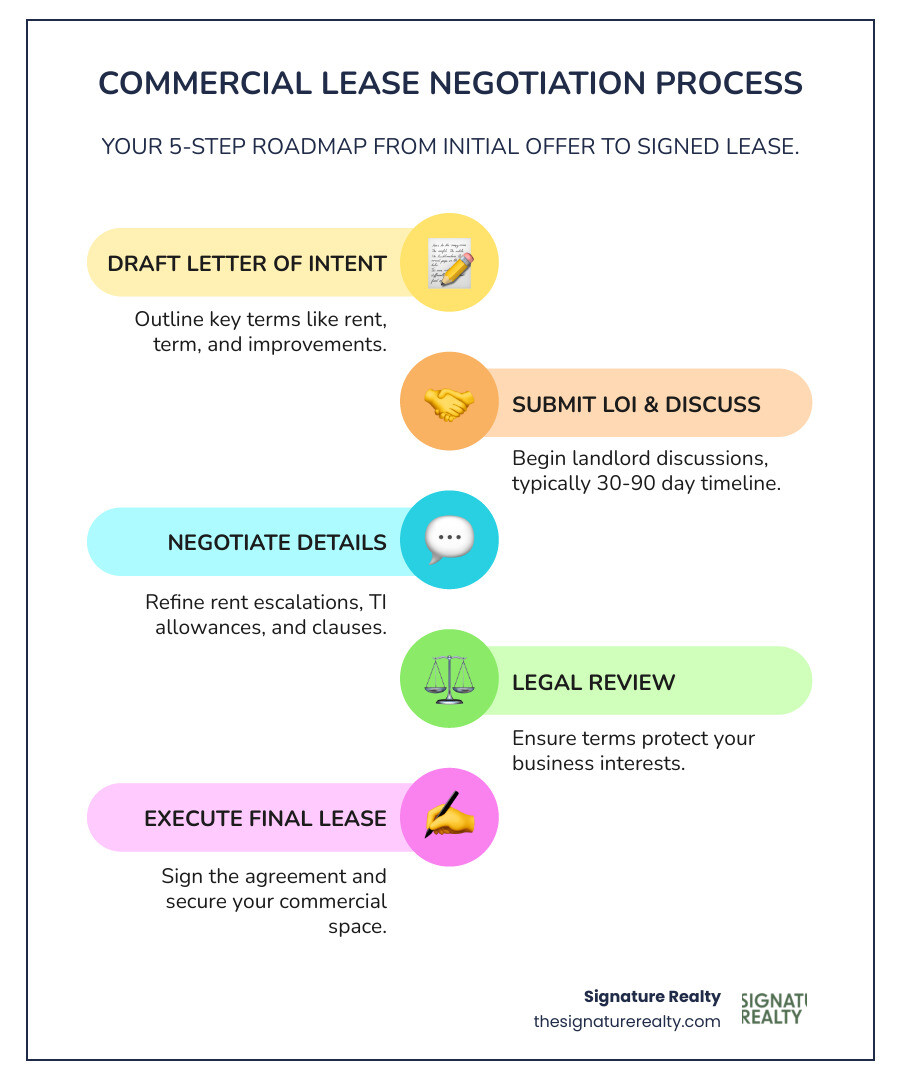
After sending your commercial lease negotiation letter sample, the goal is to convert those agreed business points into a clear, landlord-drafted lease you can confidently sign. Expect counters, edits, and a 30–90 day timeline.
Understanding Lease Types and Avoiding Common Pitfalls
The lease structure sets your true occupancy cost in Miami-Dade.
| Lease Type | What You Pay | Landlord Covers | Best For | Watch Out For |
|---|---|---|---|---|
| Gross Lease | One fixed monthly payment | Property taxes, insurance, maintenance, utilities | Small office tenants who want predictable costs | Rent may be higher to compensate landlord for covering all expenses |
| Modified Gross | Base rent + some operating expenses | Shared responsibility—varies by agreement | Mid-size offices and retail spaces | Unclear expense definitions; always clarify which costs you’re responsible for |
| Triple Net (NNN) | Base rent + property taxes + insurance + maintenance + utilities | Very little—mostly just structural repairs | Retail and industrial spaces in Doral, Medley, Hialeah | CAM charges can escalate significantly; negotiate caps on annual increases |
The Triple Net (NNN) lease dominates many industrial and retail deals in Medley, Hialeah, and Doral. The base rent can look low, but taxes, insurance, maintenance, and utilities add up fast—know the full picture. Understanding the nuances of a Triple Net Lease is essential.
Avoid these common pitfalls in South Florida:
- Vague language: Replace “reasonable” and “customary” with specific numbers, caps, and timelines.
- Hidden costs: Request detailed CAM definitions and exclusions before you sign.
- No exit plan: Secure subletting/assignment rights and, where possible, an early termination clause.
- Rushing: A careful 30–90 day process beats years of regret.
- Uncapped CAM: Target a 3–5% annual cap and include an audit right.
The Role of an Expert in Your Negotiation
A commercial real estate lawyer should always review the lease for compliance and risk before you sign. It’s a small investment that prevents costly mistakes.
As tenant representation brokers, Signature Realty brings 13+ years in Miami-Dade, exclusive off-market opportunities, and a proprietary AI deal analyzer that has helped save clients over $2 million. We know which landlords will flex on TI, free rent, or escalations in Miami, Doral, Hialeah, and Medley. See why you need a tenant representation expert.
Next Steps and Finalizing Your Lease
After business terms align, the landlord drafts the lease. Keep momentum and protect your interests:
- Review counter-offers point-by-point against your LOI.
- Have your attorney redline the lease; expect a final legal negotiation round.
- Conduct due diligence (zoning, infrastructure, environmental where relevant, parking/traffic).
- Execute the lease and secure a fully signed copy plus exhibits.
- Confirm security deposit, insurance, and TI allowance draw process in writing.
Ready to secure space in Miami-Dade? Explore available commercial properties for lease today and use our complete checklist for your negotiation to stay organized.
From Letter to Lease: Securing Your Ideal Commercial Space
You’ve drafted your commercial lease negotiation letter sample and started talks. The last mile is translating those agreed headlines into a clear, binding lease that fits your budget and operations in Miami, Doral, Hialeah, or Medley.
Understanding Lease Types and Avoiding Common Pitfalls
The lease structure you choose drives total occupancy cost. Get specific, cap pass-throughs, and avoid ambiguity.
| Lease Type | Description | Tenant Responsibilities |
|---|---|---|
| Gross Lease | Tenant pays a single, all-inclusive rent amount. Landlord covers most operating expenses (taxes, insurance, utilities, maintenance). | Minimal direct responsibility for operating costs; predictable monthly expenses. |
| Modified Gross | A hybrid where some operating expenses are included in the base rent, and others are passed through to the tenant. | Shared responsibility for operating costs, requiring careful review of which expenses are included/excluded. |
| Triple Net (NNN) | Tenant pays base rent plus a proportionate share of property taxes, building insurance, and common area maintenance (CAM). | Significant responsibility for operating costs; less predictable expenses, making CAM caps and detailed expense review crucial. |
Avoid these common pitfalls: vague language, uncapped CAM, and rushing reviews. Know your exit options (assignment/sublease) before you sign.
The Role of an Expert in Your Negotiation

A Florida commercial real estate attorney and a tenant-focused broker give you leverage and protection. We pair deep Miami-Dade market knowledge with our AI deal analyzer to back every ask with data and open up off-market options. See why you need a tenant representation expert.
Next Steps and Finalizing Your Lease
Expect counter-offers, attorney redlines, and basic due diligence before execution. When terms are finalized, sign, fund deposits, provide insurance, and confirm TI reimbursement steps.
Ready to move? Explore available commercial properties for lease today and follow our complete checklist for your negotiation.