
Why Your Lease Renewal is a Critical Negotiation Opportunity

How to negotiate lease renewal comes down to preparation and leverage. Most tenants assume renewal is a formality, but it’s your best chance to reduce rent, secure improvements, or lock in flexible terms—especially in Miami’s dynamic rental market. Whether you’re renewing office space in Doral, warehouse square footage in Medley, or retail frontage in Hialeah, the negotiation starts months before your lease ends.
Quick Steps to Negotiate Your Lease Renewal:
- Start 9–18 months early to research the market and assess your space needs.
- Review your current lease for renewal clauses, escalation terms, and holdover penalties.
- Gather Miami market intelligence on comparable rents, vacancy rates, and landlord concessions.
- Document property issues and calculate your value as a reliable tenant.
- Present alternatives to show you’ve done your homework and are willing to walk away.
- Negotiate concessions like free rent, tenant improvements, or lower escalations.
- Get everything in writing and involve a tenant representative or attorney if needed.
Why Landlords Prefer Keeping You
Tenant turnover is expensive. Landlords face lost rent during vacancy, marketing costs, broker commissions, and build-out expenses—often tens of thousands of dollars. That financial pain gives you leverage. A tenant who pays on time and maintains the unit well is an asset worth keeping, even if it means a smaller rent increase or funding minor improvements. In markets like Doral and Medley, landlords are especially motivated to retain stable, long-term tenants.
The Cost of Passive Renewal
Many tenants sign the renewal offer without question, accepting a 5–10% rent hike because they assume negotiation isn’t an option. This passive approach can cost thousands over a multi-year lease. Even small wins, like a one-time rent credit or a lower cap on expense increases, add up to meaningful savings. Renewal is your chance to negotiate term flexibility, expansion rights, and maintenance responsibilities that protect your business.
I’m Brett Sherman, and I’ve helped dozens of commercial tenants in Miami, Doral, Hialeah, and Medley negotiate lease renewals that save money and support growth. Using AI-driven market benchmarking and tenant-side representation, I help clients secure concessions they would have missed on their own. This guide provides the playbook to turn your lease renewal into a strategic opportunity.
Must-know how to negotiate lease renewal terms:
- a guide to negotiating leases for commercial properties
- commercial lease negotiation checklist
- how to negotiate free rent for a commercial lease
The Pre-Negotiation Playbook: How to Negotiate Lease Renewal Like a Pro
Step 1: Start Early and Assess Your Business Needs
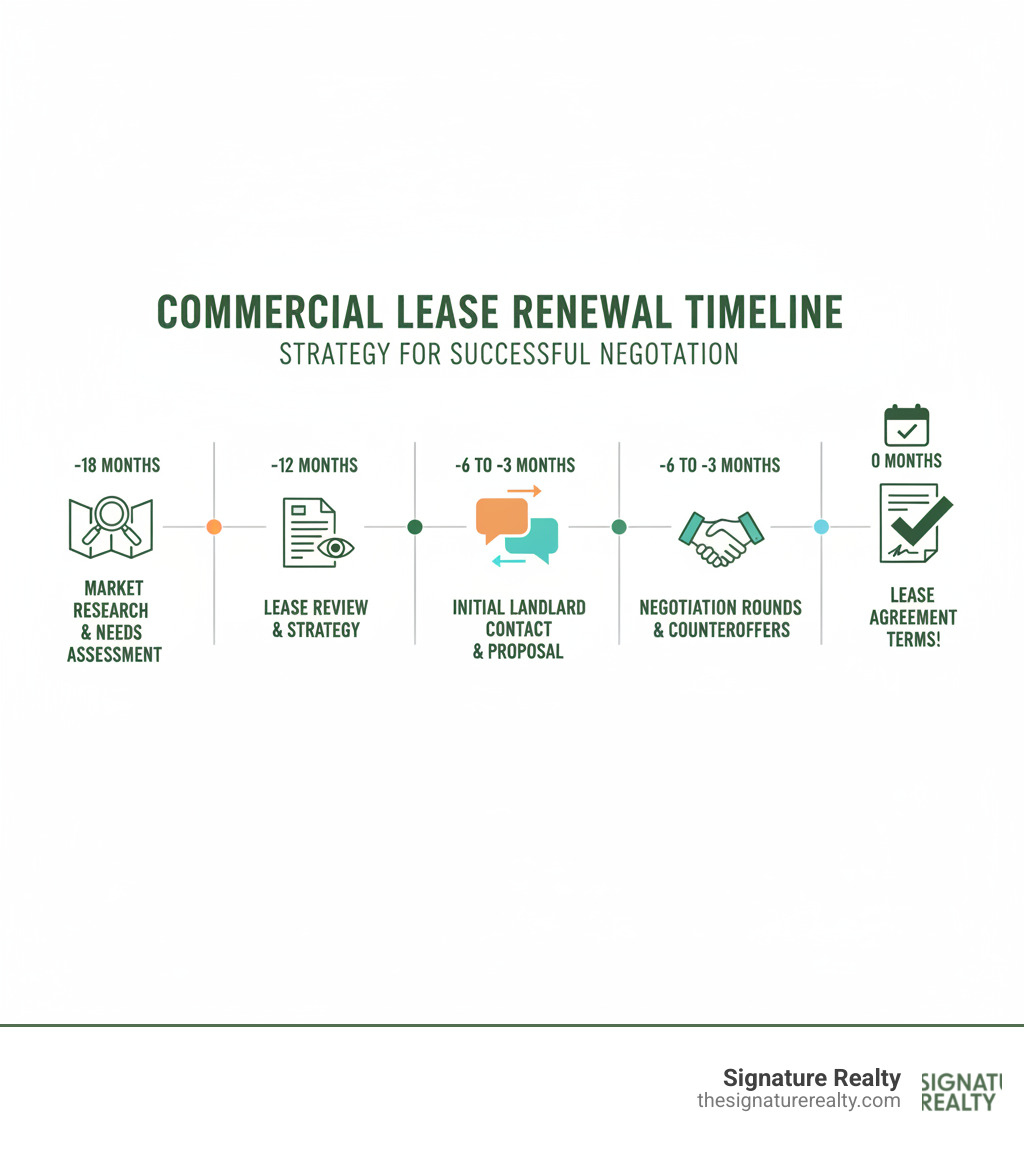
The biggest mistake tenants make is waiting too long. How to negotiate lease renewal effectively starts with one rule: begin 9 to 18 months before your lease expires. This timeline gives you options, and options create leverage. For larger spaces in Doral or Medley, you may even need 18 to 24 months.
Before contacting your landlord, assess your actual space needs. Has your business grown, or has a hybrid work model left you with empty desks? Determine if you need more, less, or a different kind of space. This isn’t a weakness; it’s a data point for negotiation.
Next, document everything that’s wrong with the property. Take photos of worn carpets, a noisy HVAC unit, or outdated fixtures. If you’ve been dealing with problems, the renewal is your time to get them fixed or use them as leverage to offset a rent increase.
Step 2: Master the Market: Gathering Intelligence in Miami
Market intelligence is your secret weapon. When you know what comparable properties in Doral, Hialeah, and Medley are leasing for, you negotiate from a position of strength.
Start by researching current rental rates for similar properties. You’ll need to talk to brokers or use professional market benchmarking tools for accurate data. Also, pay attention to vacancy rates—a high rate means landlords are more eager to make a deal.
Look beyond asking rents to see what concessions landlords are offering, such as free rent or tenant improvement allowances. This will help you understand the net effective rent, which is the true cost after factoring in such deals. When comparing properties, always compare the same metric to avoid being misled by advertised rates.
Step 3: Dissect Your Current Lease Agreement

Before you negotiate, you must understand your current agreement. Pull out your lease and look for these critical clauses:
- Renewal options: Do you have one? Note the notice requirement (often 90-180 days). Missing this deadline means you lose your option. Activate it in writing to protect yourself, even if you plan to negotiate better terms.
- Escalation clauses: How does your rent increase? If it’s tied to the Consumer Price Index (CPI), negotiate for a cap (e.g., 3-4%) to protect against volatility. Other leases use fixed increases or reset to fair market value.
- Holdover penalties: What happens if you stay past your expiration date? Most leases include severe penalties (150% or more of your rent), which is why starting early is crucial.
- Maintenance responsibilities: Clarify who is responsible for what, especially for recurring issues like HVAC problems. Get it in writing.
- Assignment and subletting clauses: Can you sublet your space if your business needs change? Negotiate for more flexibility here if you’re uncertain about long-term needs.
Step 4: Understanding Key Commercial Lease Concessions
How to negotiate lease renewal isn’t just about lowering rent. Smart tenants pursue a menu of concessions that reduce total occupancy costs.
- Free rent (abatement): A period where you don’t pay rent, often used to offset other costs. If a landlord won’t lower the monthly rate, they may offer a month or two free.
- Tenant improvement (TI) allowances: Money from the landlord to upgrade your space (e.g., new flooring, lighting, or layout). Landlords often prefer this to a rent reduction because it improves their property’s value.
- Security deposit reduction: If you have a perfect payment history, ask for your deposit back or have it applied to future rent.
- Operating expense caps: In a triple-net (NNN) lease, these caps limit how much your share of common area maintenance (CAM), taxes, and insurance can increase each year.
- Parking and signage: Don’t overlook these perks. Additional parking spots or better signage can be a significant win, especially in busy areas like Hialeah or downtown Miami.
Executing the Negotiation and Finalizing the Deal
Step 5: How to Negotiate Lease Renewal Terms Effectively
Now it’s time to put your preparation into action. Successful negotiation depends on presenting your case with confidence, backed by solid research.
Open Communication and Strategic Leverage
Reach out to your landlord 9 to 18 months early to signal professionalism. Your goal is to show genuine interest while keeping your options open. Your strongest leverage is your track record. Remind the landlord, “We’ve never missed a payment in three years and keep the space immaculate.” A reliable tenant is an asset landlords fight to keep.
Frame the negotiation around helping the landlord avoid turnover costs—lost rent, broker commissions, and renovation expenses. For a typical commercial space in Hialeah or Doral, these costs can easily exceed $20,000. Keeping you saves them money.
Presenting Your Case
Come to the table with quotes from comparable spaces. This isn’t a bluff; it’s good business. You can say, “I’ve looked at three similar properties nearby, and they’re offering $22 per square foot with two months of free rent. Can we discuss bringing our rate more in line with the market?” Also, present your documentation of property issues and request they be addressed as part of the renewal.
If the landlord won’t budge on base rent, pivot. Ask for a tenant improvement allowance, free rent, or caps on operating expenses. Offering a longer lease term can also open up better concessions. Avoid the month-to-month trap—it offers zero security and comes with significantly higher rent.
Step 6: When to Seek Professional Help and Finalize Your Agreement
Commercial leases are complex legal documents. Bringing in professionals is often essential to protect your interests.
The Value of a Tenant Representative and Attorney
A tenant representative is a commercial real estate broker who works exclusively for you, not the landlord. At Signature Realty, we’ve spent 13+ years representing tenants across Miami, Doral, Hialeah, and Medley. We bring market intelligence and use our proprietary AI deal analyzer to identify leverage and save clients money. Our services typically cost tenants nothing out-of-pocket, as our commission is paid by the landlord.
A real estate attorney handles the legal review. Once terms are agreed upon, they ensure the lease document accurately reflects the deal and contains no hidden traps. For any significant commercial lease, using both a tenant rep and an attorney is the gold standard.
Get Everything in Writing—No Exceptions
This is non-negotiable. Every term you agree on must be in the final, signed lease. A verbal promise to repaint the office or cap expenses is worthless if it’s not in the contract. Review every page carefully before signing.
Your BATNA: The Power to Walk Away
Always maintain your Best Alternative to a Negotiated Agreement (BATNA). This is your backup plan—a comparable property you’re ready to move to. Your BATNA gives you the power to walk away from a bad deal. Sometimes, relocating is the smartest financial decision.
A successfully negotiated lease lowers costs, improves your workspace, and provides the flexibility to grow. At Signature Realty, we specialize in securing these outcomes. Our data-driven approach and deep local knowledge ensure you negotiate from a position of strength. Explore our tenant representation services for your Miami business and let’s start building your renewal strategy today.