
Your Lease Renewal is a Multi-Million Dollar Opportunity

How to negotiate a commercial lease renewal successfully requires starting 12-24 months early, conducting thorough market research, creating competition, and engaging professional tenant representation. Many tenants simply sign the amendment their landlord sends, leaving millions of dollars on the table. Leases are typically a company’s second-largest expense behind payroll, yet most businesses accept renewal terms that are worse than what a new tenant would receive.
Landlords know that moving is a massive disruption, so they count on you taking the path of least resistance. However, they also want to avoid vacancies, renovation expenses, and marketing costs. This is your leverage.
Quick steps to win your renewal:
- Start early – Begin discussions 18-24 months before expiration.
- Know the market – Research comparable rates in Miami, Doral, Hialeah, and Medley.
- Create leverage – Tour alternative properties to generate competition.
- Assemble your team – Hire a tenant rep broker and a commercial real estate attorney.
- Negotiate beyond rent – Focus on TI allowances, free rent, and flexible terms.
- Document everything – Get all agreements in writing before signing.
The South Florida commercial real estate market—particularly in Miami, Doral, Hialeah, and Medley—has shifted dramatically. Post-pandemic vacancy rates and hybrid work policies have tilted bargaining power toward tenants. If you’re renewing office space in Doral or warehouse space in Medley, current conditions offer opportunities that didn’t exist when you signed your original lease.
I’m Brett Sherman, and I’ve negotiated hundreds of commercial lease renewals across South Florida, consistently saving clients 15-30% versus their landlord’s initial offer. In this guide, I’ll walk you through the playbook we use to turn lease expirations into leverage and secure terms that support your business growth.
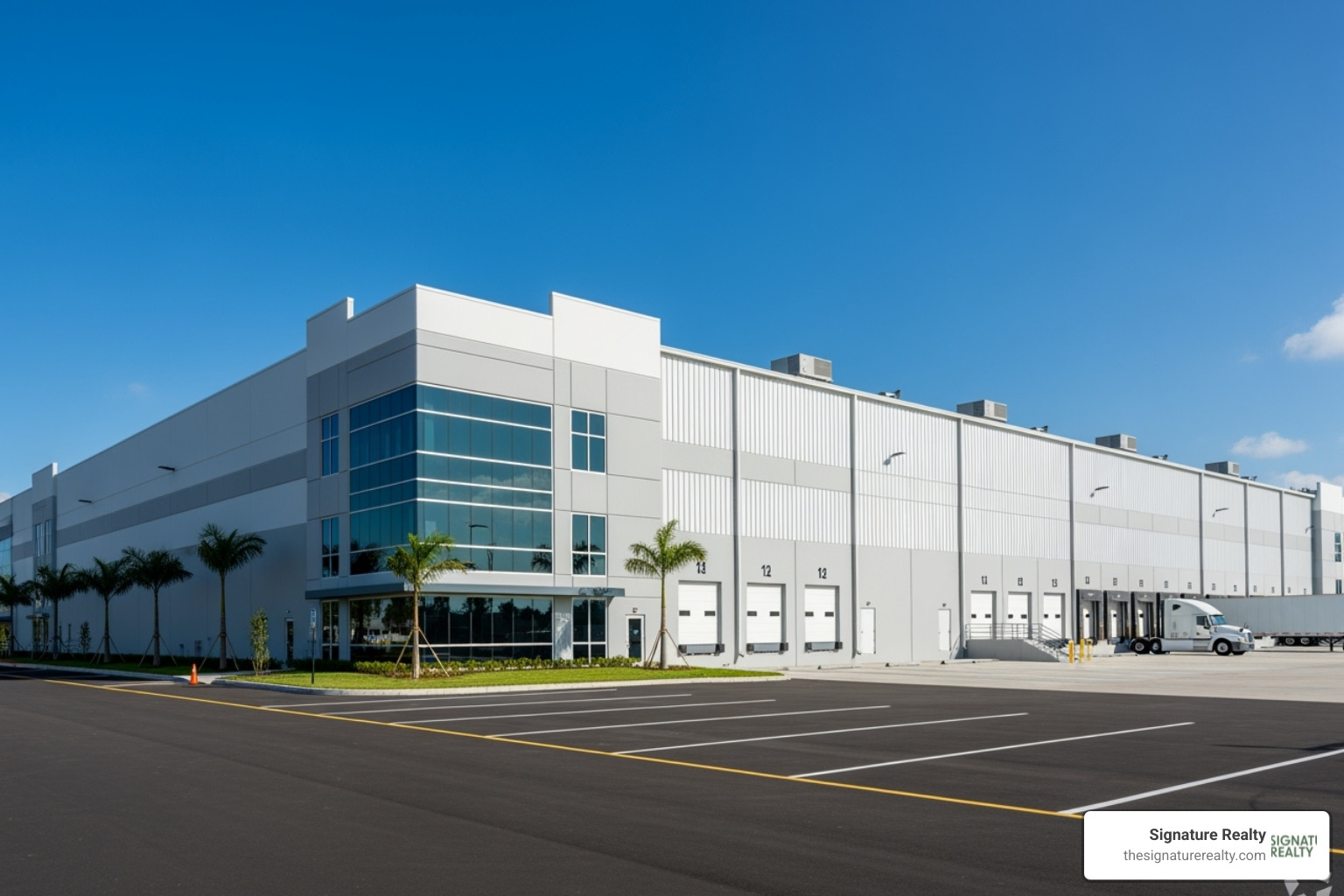
a guide to negotiating leases for commercial properties
commercial lease negotiation checklist
how to negotiate a commercial lease agreement
The Pre-Negotiation Playbook: Assembling Your Leverage in the Miami Market
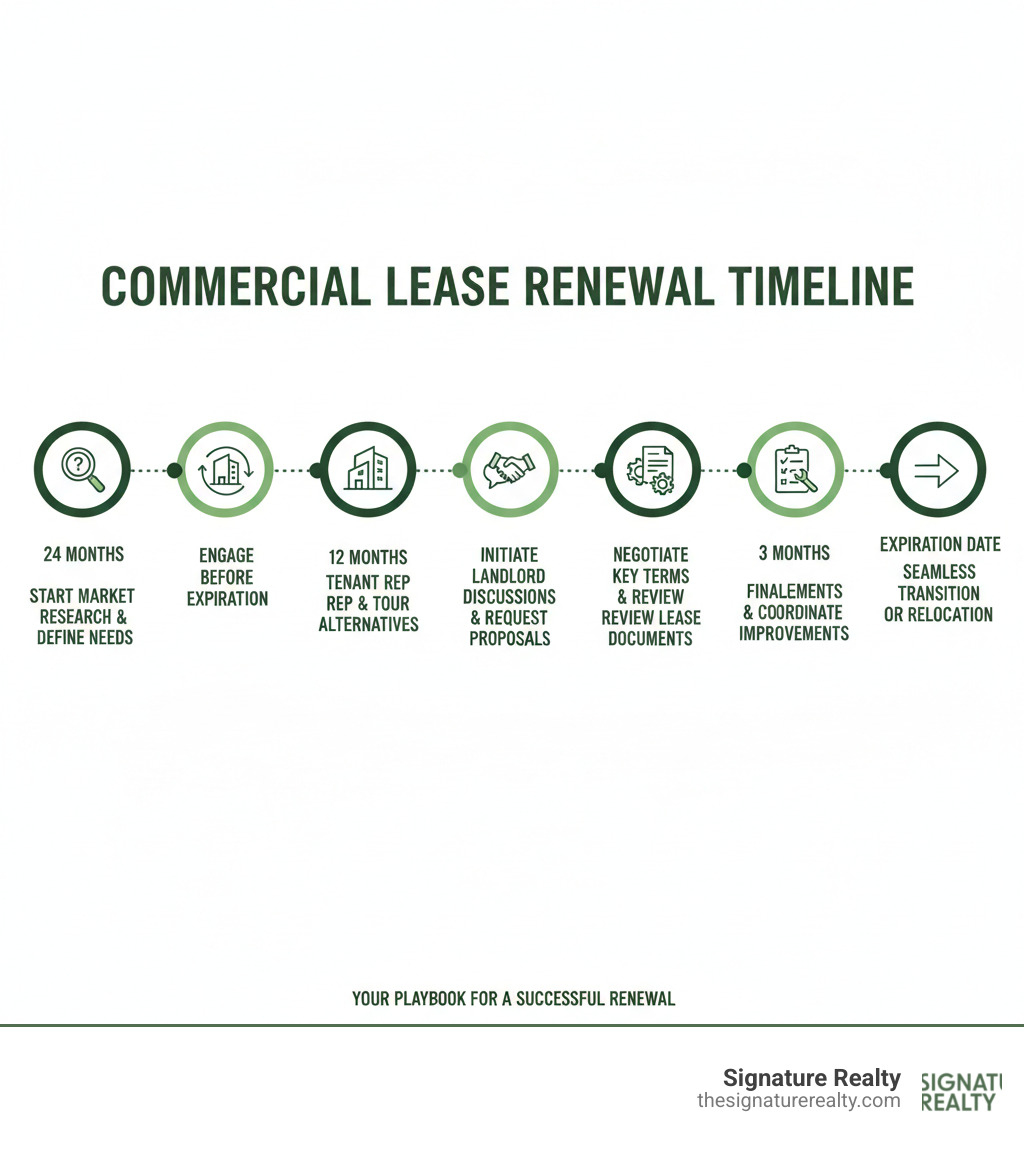
Success in a lease renewal negotiation is determined long before you talk to your landlord. It’s about preparation, market knowledge, and creating options that give you leverage. Landlords know moving is a hassle and often offer existing tenants worse terms than new ones, assuming you’ll accept the easy path. The solution is to start your renewal process 18-24 months before your lease expires.
This timeline is the minimum you need to assess your options, research the Miami market, tour alternatives, and negotiate from a position of strength. For a complete framework, see our Commercial Lease Negotiation Guide 2025.
Step 1: Analyze Your Current Lease and Future Needs
Before any outreach, become an expert on your current lease and future business needs. This foundational homework is where you build savings.
Review your existing lease. Pull out the document and analyze key clauses. Most companies don’t, leading to overbilling and missed opportunities. Pay attention to:
- Escalation Clauses: How much does your rent increase annually?
- CAM (Common Area Maintenance) Fees: Audit these charges. We often find tenants are overpaying.
- Renewal Options: A pre-negotiated rate might be higher than the current market rate in Doral or Hialeah. Don’t assume it’s a good deal.
- Holdover Clauses: These penalties for staying past expiration can be 150-200% of your normal rent. Know your deadline.
Assess your future business needs. Your company has likely changed since you last signed. Ask yourself:
- How efficiently are we using our space? With hybrid work, you may be paying for 30% more space than you need.
- What are our growth projections? Plan for the next 3-5 years. You may need more square footage or flexible expansion rights.
- Is our current space still the right fit? Sometimes the cost of moving is justified by a more efficient layout or better location. Exploring available Office Space Miami can provide clarity.
Step 2: Conduct Hyper-Local Market Research
Knowing the South Florida market better than your landlord is your greatest advantage. Arm yourself with hard data on comparable properties (comps), vacancy rates, and current landlord concessions.
Your research must be hyper-local: Doral office comps if you’re in Doral, and Hialeah or Medley industrial rates if you’re in one of those warehouse-heavy markets. Look for recently leased properties similar to yours to benchmark a fair deal. High vacancy rates in your building or submarket mean landlords are more willing to negotiate.
Crucially, distinguish between asking rents and effective rents. Landlords advertise one number, but the final deal is often much lower after factoring in free rent and tenant improvement (TI) allowances. Landlords often offer better incentives to attract new tenants than to retain existing ones. Your job is to demand parity.
Post-pandemic shifts, like hybrid work and record sublease availability in Miami-Dade, have created more options and increased tenant leverage. Here’s a snapshot of how asking rents can vary:
| Class A Office Space – Average Asking Rents (Illustrative) | Per Square Foot |
|---|---|
| Miami (Downtown/Brickell) | $65 – $85 |
| Doral | $45 – $60 |
Note: These figures are illustrative. Our AI deal analyzer provides precise, real-time data.
When you know that comparable spaces are leasing for less and with better concessions, you’re no longer negotiating blind. You’re negotiating with data. See what’s on the market by browsing Commercial Property for Rent in your area.
Step 3: Understand the Landlord’s Position
To find a win-win outcome, you must understand your landlord’s motivations. Above all, landlords want to keep buildings occupied. Vacancies are their biggest expense. A vacant space means lost rent, renovation costs, marketing fees, and brokerage commissions, all while they still cover the mortgage and operating costs.
Your history as a reliable tenant has real value. You save them all the costs and risks associated with finding a new tenant. Frame your negotiation around this value. Keeping you could save them tens or hundreds of thousands of dollars.
Observe your building: Are there multiple vacancies? Is maintenance deferred? These are signs of a motivated landlord. A skilled tenant representative will have market intelligence on specific landlords’ financial positions and negotiation patterns. Understanding their needs helps you craft proposals that meet their goals while securing the best possible terms for your business. For more on your rights, review Florida’s commercial tenancy laws.
Execution is Everything: How to Negotiate a Commercial Lease Renewal
You’ve done your homework. Now it’s time to put that knowledge to work. Many tenants try to negotiate alone to save money, but your landlord has a team of brokers and lawyers. Going it alone is a costly mistake when dealing with your second-largest business expense.

One of the most powerful strategies is creating competition. Even if you love your space in Doral or Medley, you must tour alternatives. Nothing motivates a landlord like knowing you have other options. And remember the golden rule: get everything in writing. Verbal agreements are worthless.
This is where our Tenant Representation Services provide immense value, handling the process so you can run your business.
Step 1: Master the Key Terms for Your Renewal Negotiation
Every term in a commercial lease is negotiable. Focus on these key points to create an agreement that works for your business:
- Base Rent: Negotiate the initial rate, annual escalations, and any rent-free periods.
- Lease Term Length: A shorter term (1-3 years) offers flexibility, while a longer term (5-10 years) can lock in better rates.
- Tenant Improvement (TI) Allowance: Ask for an allowance to fund updates like new paint, flooring, or lighting, even on a renewal.
- Free Rent: A period of zero base rent at the start of your term is a common concession in competitive markets.
- Flexible Terms: Negotiate for break clauses (early exit), expansion rights (first dibs on adjacent space), or contraction rights (ability to reduce your footprint).
- Sublease and Assignment: Secure your right to sublease your space or assign the lease if your business needs change.
- Operating Expenses (CAM): Negotiate a cap on annual increases to protect your budget from surprise spikes in taxes, insurance, or maintenance fees.
- Holdover Penalties: Reduce the brutal 150-200% rent penalty for staying past expiration and add a grace period.
- Personal Guarantees: Offer a larger security deposit or a burn-off clause where the guarantee disappears after 12-24 months of timely payments.
- Force Majeure: Ensure this clause covers events like government-mandated shutdowns, not just natural disasters.
Step 2: Avoid Common Mistakes in How to Negotiate a Commercial Lease Renewal
Knowing these common pitfalls will help you sidestep them entirely:
- Starting too late: Begin 18-24 months before expiration. Waiting until the last minute destroys your leverage.
- Ignoring your renewal clause: Your pre-set renewal rate may be higher than current market rates in Doral or Hialeah. Always compare.
- Failing to create leverage: Tour other properties. Competition is essential to getting your landlord’s best offer.
- Overlooking hidden fees: Scrutinize CAM charges and other operating expenses. Use a Commercial Lease Negotiation Complete Checklist to track everything.
- Not involving professionals: A commercial real estate attorney and a tenant representation broker are essential. Always get a lawyer’s opinion, as the savings they generate far outweigh their fees.
- Accepting the first offer: A landlord’s initial proposal is never their best deal. Always counter-offer.
Step 3: Finalizing the Deal and Securing Your Future
As you near the finish line, ensuring the negotiated terms are correctly documented is critical. This is where your professional team is invaluable.
A tenant representative broker acts as your strategic partner. At Signature Realty, we use our proprietary AI deal analyzer for real-time insights into the Miami, Doral, Hialeah, and Medley markets. We create competition and handle 90% of the work, saving you time and money. Our data-driven approach has saved clients over $2 million. Crucially, we only represent tenants, never landlords, so our advice is 100% focused on your best interests.
A commercial real estate lawyer is your final line of defense. They review the lease to ensure all terms are legally sound, identify vague language, and confirm that your rights are protected. This legal review is an investment that can save you hundreds of thousands in future disputes.
Finalizing the agreement requires careful review. Compare the final lease document against your negotiated terms. Ensure every concession, TI dollar, and free-rent month is explicitly written down. Do not sign until you are completely comfortable.
For a data-driven approach in the Miami, Doral, Hialeah, and Medley markets, Signature Realty provides the expert representation needed to secure optimal terms. Our 13+ years of experience and access to off-market deals mean we don’t just negotiate—we win.
Ready to explore your options? Check out available Lease Properties or reach out to discuss how we can help you master how to negotiate a commercial lease renewal.